“I lost weight, but my jawline looks even blurrier in the mirror.”
“My weight is back to normal since I had my baby, but my belly isn't what it used to be.”
“I haven't gained weight, but it feels like I've developed a double chin.”
These three concerns look different, but they share one thing: sagging.
And sagging usually involves a mix of fat volume that is still there and skin elasticity that has stretched and not come back.
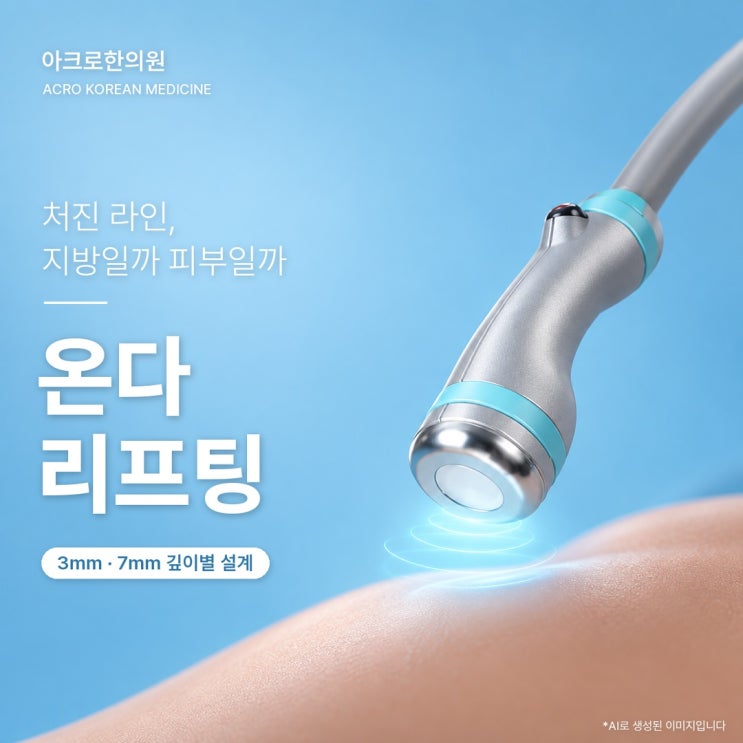
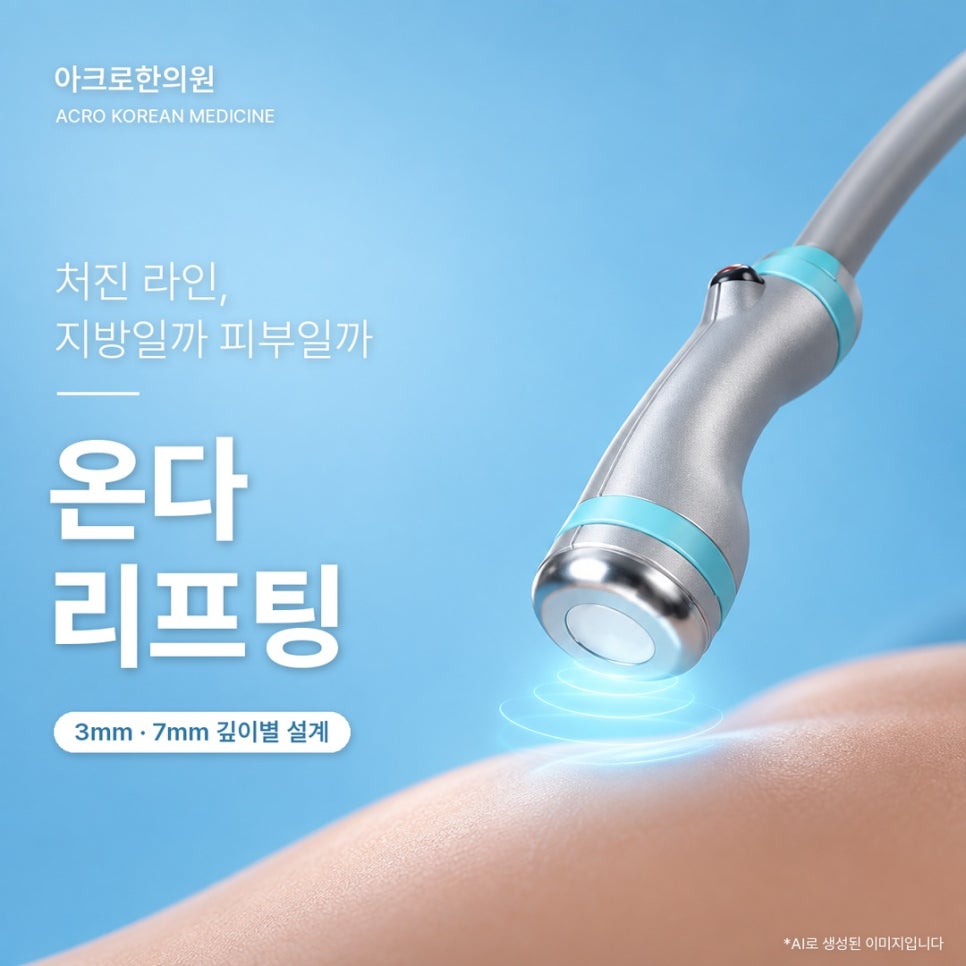
ONDA Lifting is a microwave treatment that can work on these two layers separately, at different depths.
First we will go over what ONDA Lifting is, and then explain how it is designed for different situations.
Do any of these sound familiar?
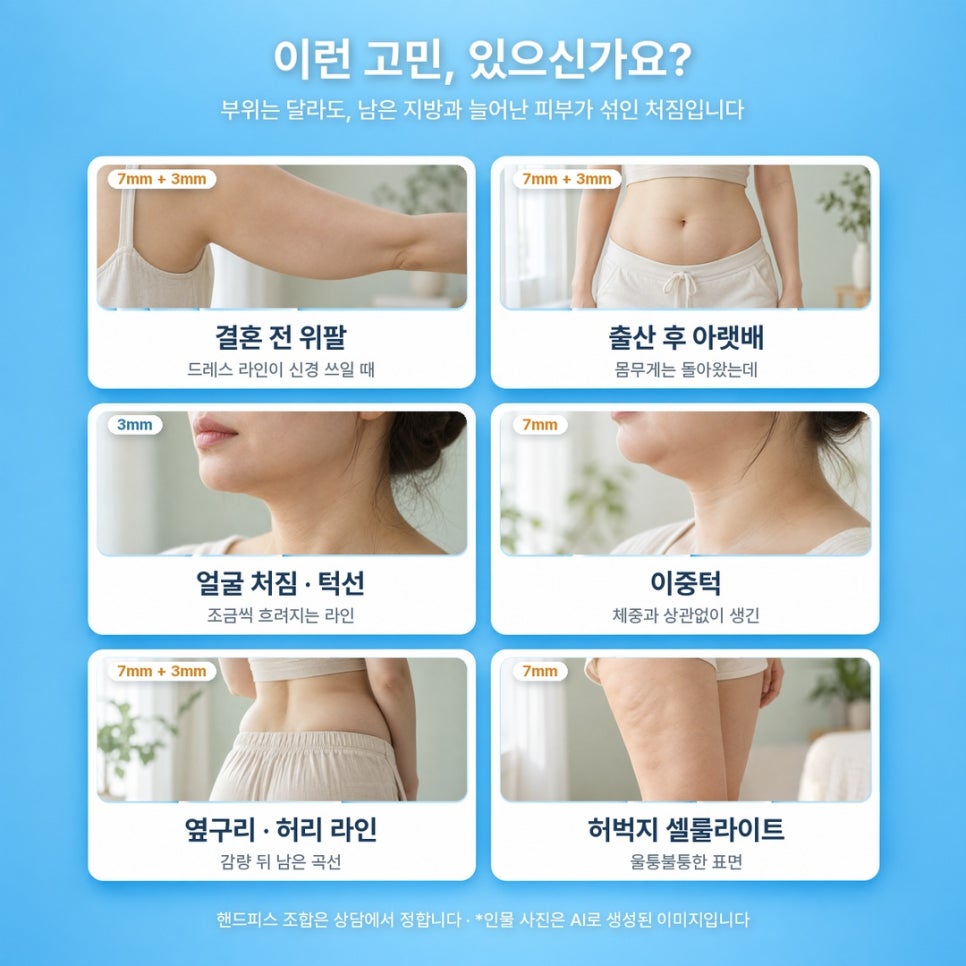
The back of the upper arm that bothers you before a wedding,
the lower abdomen that doesn't come back after childbirth,
a facial contour and jawline that is slowly blurring,
a double chin that appeared regardless of weight,
the flank and waist line left after weight loss, and bumpy thigh cellulite.
The areas differ, but most of these are sagging made up of a mix of remaining fat and stretched skin.
Let's start by looking step by step at how ONDA Lifting approaches these concerns.
Q1. What is ONDA Lifting? — Principle and effects
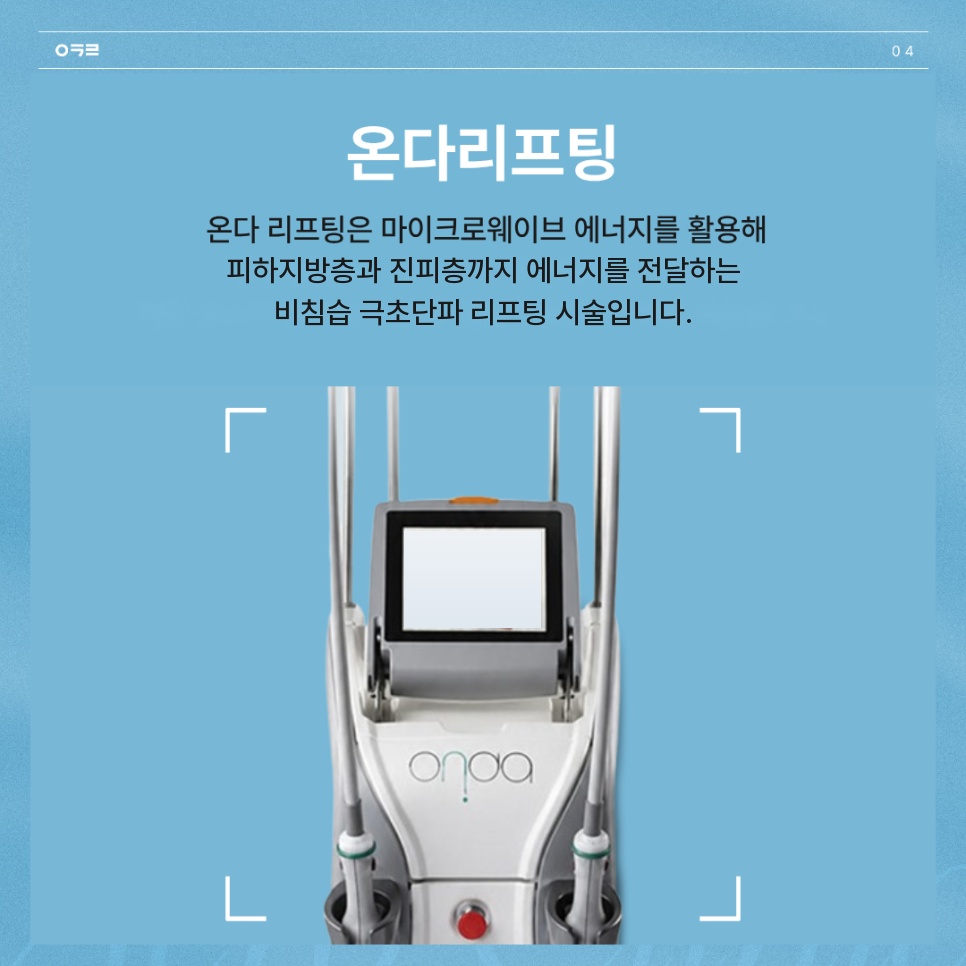
ONDA Lifting is a 2.45GHz microwave treatment performed with the ONDA device from DEKA of Italy.
It makes molecules that are polar, like water, vibrate rapidly to generate heat, and the subcutaneous fat layer also contains this kind of water.
ONDA delivers this energy to match the depth of the subcutaneous fat layer, and the skin surface is cooled with a cooling tip (about 5°C) so that the heat stays trapped within the fat layer.
It is a method that cools the surface and mainly heats the fat layer. Manufacturer materials explain that about 80% of the energy goes to the fat layer and 20% to the dermis [2].
It is a non-invasive treatment performed on top of the skin, with no incision or injection.
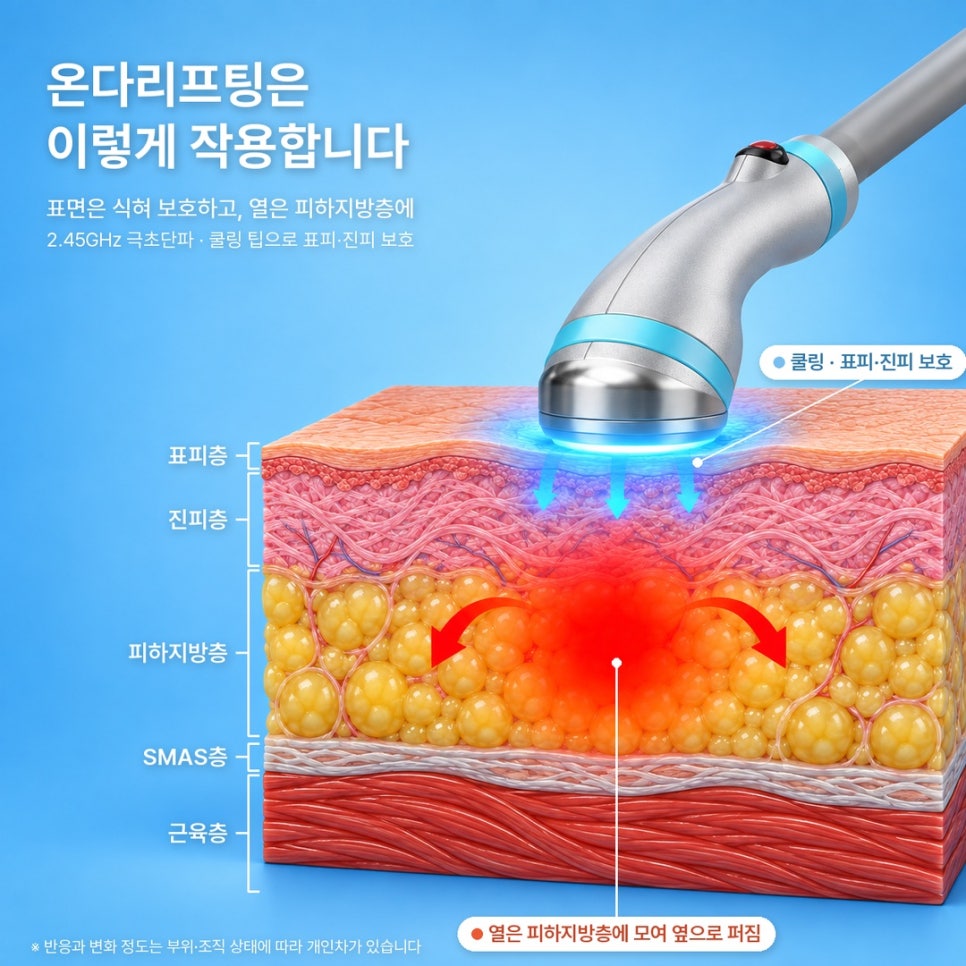
There are three main actions expected from ONDA Lifting.
· Skin elasticity — The heat stimulus delivered to the shallow skin layer is known to contract collagen fibers and to take part in the process by which new collagen is formed. In a small study of submental sagging, improvement in the sagging grade was reported [4].
· Remaining fat volume — The heat stimulus delivered to the subcutaneous fat layer is known to be involved in reducing fat cells, and a small study of the abdomen reported a decrease in subcutaneous fat thickness [3].
· Cellulite — The fat layer and the connective tissue between them are stimulated together, which can help in managing a bumpy surface. An international advisory board consensus summarized patient selection and treatment criteria for cellulite and localized fat treatment [1].
These changes may appear over several weeks rather than being completed all at once.
※ The degree and timing of change vary from person to person depending on the area, tissue condition, and number of sessions.
📎 Learn more — An article summarizing clinical studies on ONDA Lifting: “ONDA Lifting Effects, Verified Through Clinical Papers” blog.naver.com/acrohani01/224344991475
Q2. How is it different from HIFU and RF lifting, known as Ulthera and Thermage?
Lifting treatments differ in character depending on which energy they use and which layer they target. Rather than one being better, the right method differs depending on the cause and area of sagging.
HIFU (high-intensity focused ultrasound), known as Ulthera, switches between cartridges of different depths (1.5, 3.0, and 4.5mm) to focus energy as points in several layers, and the 4.5mm reaches the fascial layer (SMAS).
RF (radiofrequency), known as Thermage, heats the deep dermis broadly.
However, even at the same depth, the face and body have different fat thicknesses, so the layer actually reached differs by area.
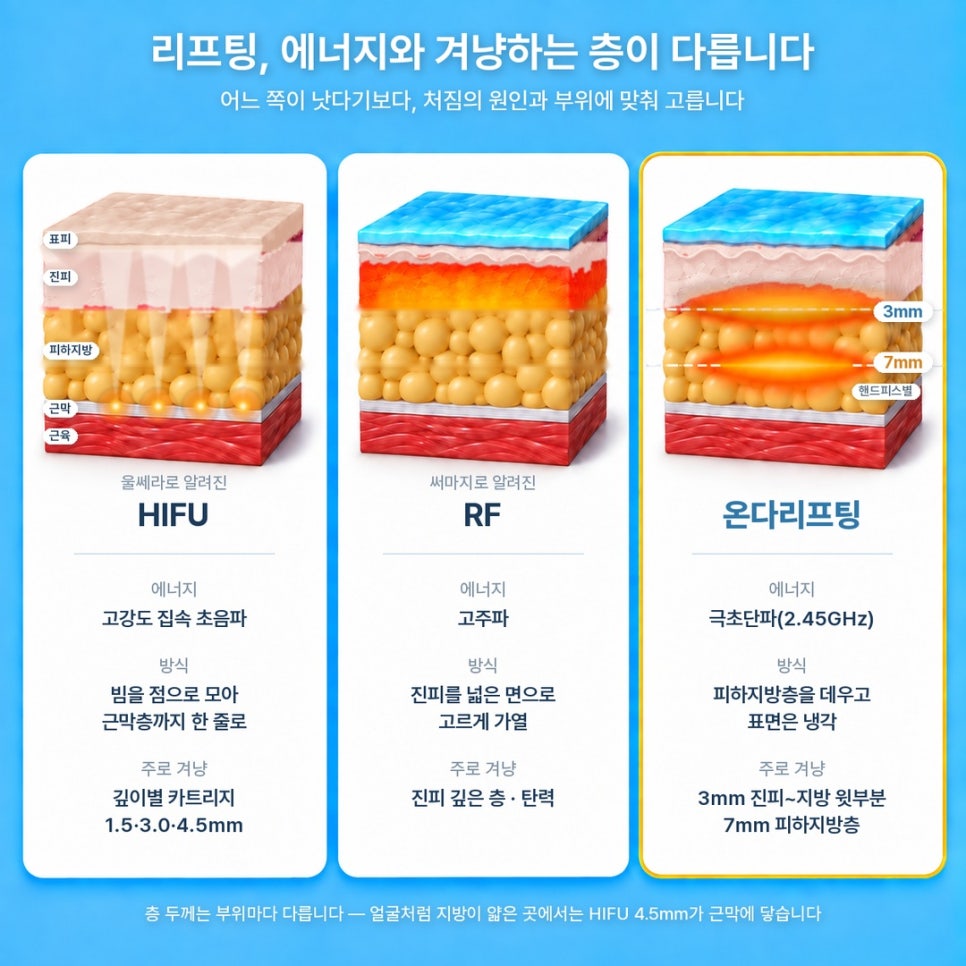
| HIFU, known as Ulthera | RF, known as Thermage | ONDA Lifting | |
|---|---|---|---|
| Energy | High-intensity focused ultrasound | Radiofrequency (RF) | Microwave (2.45GHz) |
| Method | Focuses the beam on a single point and delivers the points in a line | Heats a wide surface evenly | Choice of two depths, 3mm and 7mm |
| Main target | Cartridges by depth: 1.5, 3.0, 4.5mm (up to the fascial layer) | Deep dermis · elasticity | Subcutaneous fat layer · 3mm elasticity · 7mm fat layer |
To sum up, the biggest difference of ONDA Lifting is that it directly targets the subcutaneous fat layer.
That gives it a wider range of design especially for sagging where fat volume and skin laxity coexist.
Conversely, if the main cause is sagging of the fascial layer, a different method may suit better, so we check this first in consultation.
Q3. How do the 3mm and 7mm handpieces differ? What about even deeper fat?
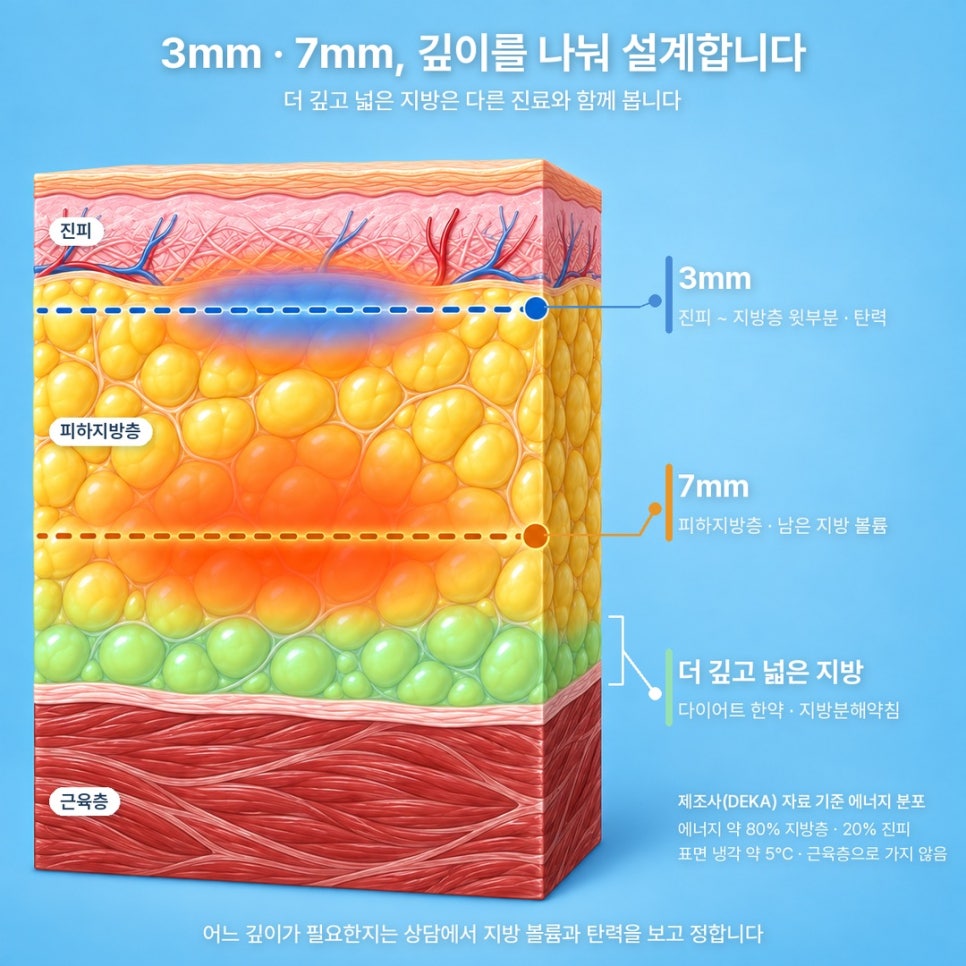
The core of ONDA Lifting is that it uses different depths separately.
| Handpiece | Layer the energy reaches | Concerns mainly considered |
|---|---|---|
| 3mm | Dermis to the upper part of the fat layer (Pocket) | Facial elasticity and sagging + shallow remaining fat |
| 7mm | Subcutaneous fat layer (Shallow) | Remaining fat volume, submental fat, cellulite |
In manufacturer (DEKA) materials, the 3mm handpiece (Pocket) is labeled with an action depth for facial lifting and elasticity, and the 7mm handpiece (Shallow) for skin elasticity, submental fat, and cellulite [2]. While cooling protects the surface at about 5°C, it is designed so that the subcutaneous temperature rises to about 50-53°C.
The 3mm is for the face, stimulating fibroblasts in the dermis to help produce collagen and elastic fibers, and it does not stay only in the dermis but also reaches the upper part of the fat layer.
If you treat only a shallow layer where fat volume is the problem, or only a deep layer where skin elasticity is the problem, expectations and results can diverge.
That is why, even for the same “arm sagging,” the ratio of 3mm to 7mm and the energy differ from person to person.
So what about fat that is deeper than 7mm, or spread widely across the whole body?
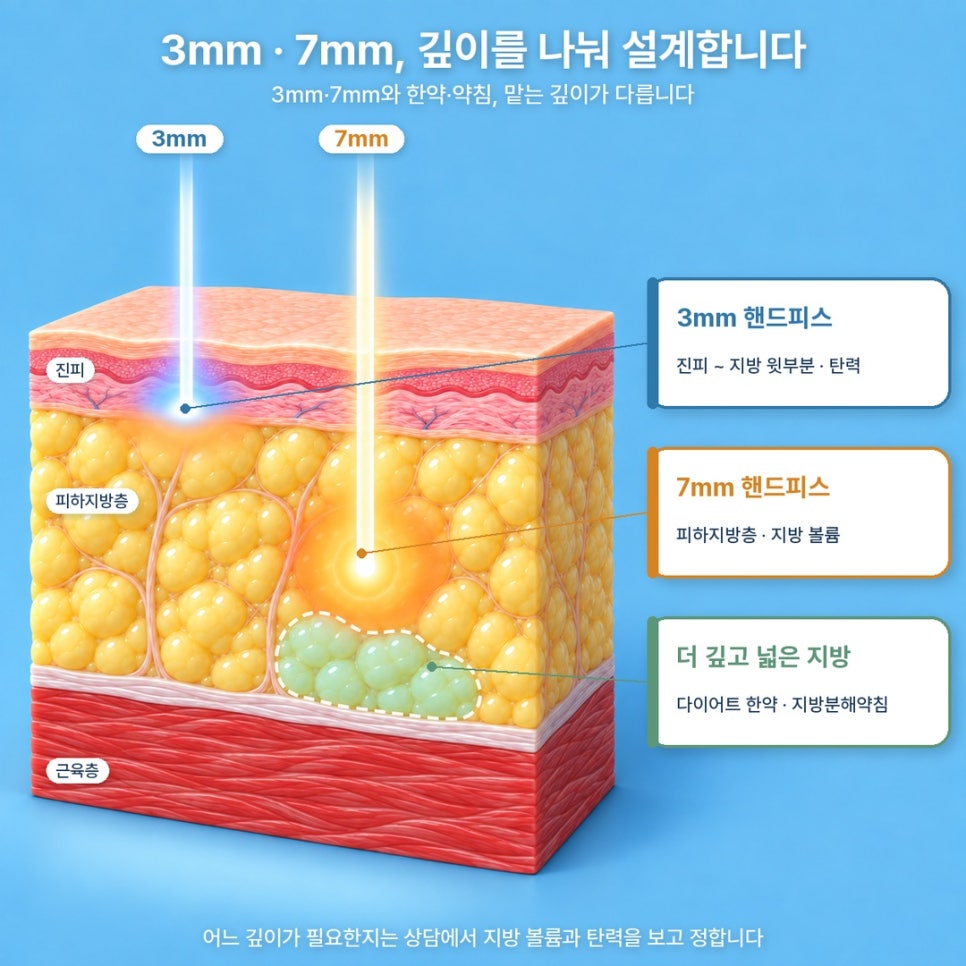
It is difficult to manage whole-body fat or a thick fat layer with a treatment that works on a single area alone.
In such cases, ACRO Korean Medicine Clinic
· Diet herbal medicine — first manages overall body fat with a prescription tailored to your constitution and condition,
· Fat-dissolving pharmacopuncture (ACRO CUT) — also considers fat that remains thick in a specific area such as the abdomen, arms, thighs, or double chin.
ONDA Lifting is closer to a role of refining the volume and elasticity that remain after that.
What to start with is decided together after looking at your current amount of fat and skin condition.
Q4. Why does sagging flesh develop?
Beneath the skin is a fat layer, and over it lies skin woven from collagen and elastic fibers.
When you gain weight, fat grows and the skin stretches along with it, but even when weight drops and the fat gets smaller, the stretched skin does not return at the same speed.
The decrease in collagen with age acts in the same direction.
So the sagging you see in the mirror is usually a case where fat volume remains, a case where skin elasticity has declined, or a case where the two are mixed.
Q5. Can it also help with sagging cheeks and jawline after losing weight with Mounjaro or Wegovy?
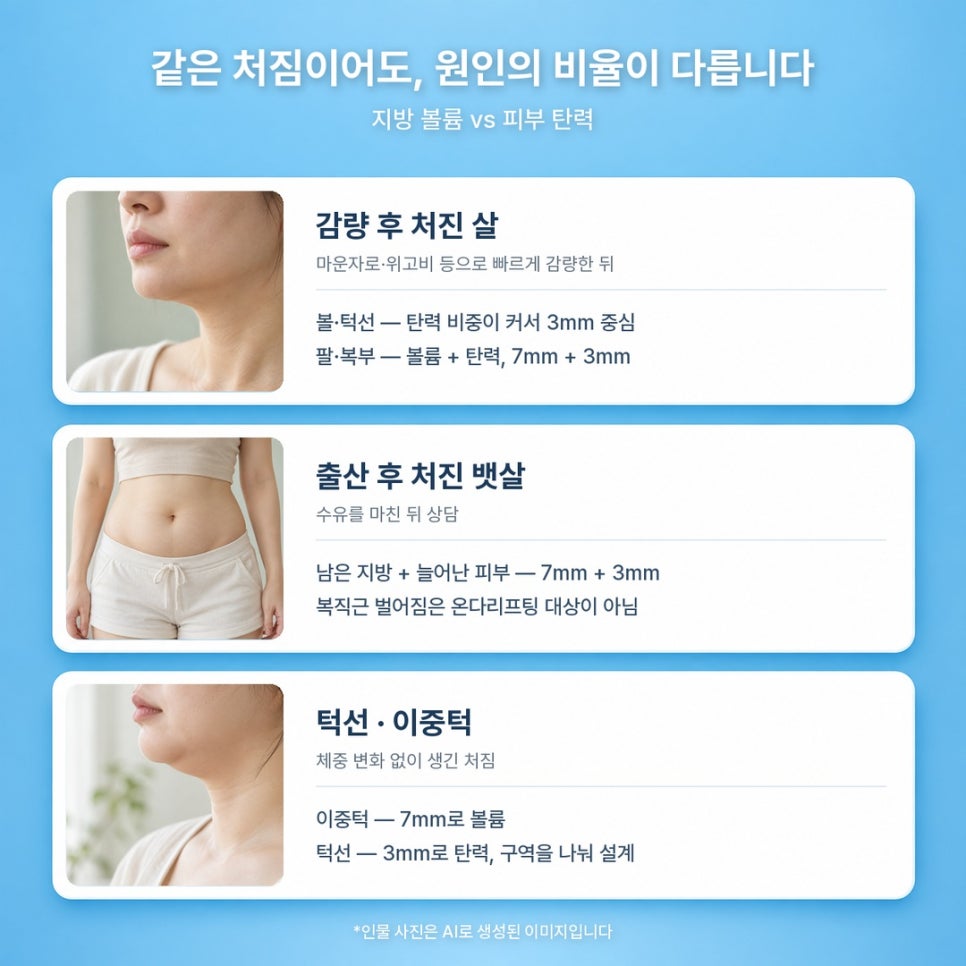
When body weight drops sharply in a short time with GLP-1 class drugs such as Mounjaro and Wegovy, in the face cheek fat is lost first and the skin cannot keep up, so the jawline may blur or the cheeks may look hollow. This is what is commonly called “Ozempic face.”
In this case the share of reduced skin elasticity is often larger than that of fat, so we design the face by looking at elasticity mainly with the 3mm and adding the 7mm only where volume remains, such as under the chin. Adding fat-layer energy to cheeks that are already quite hollow is judged cautiously.
ACRO Korean Medicine Clinic always works to minimize cheek hollowing.
Q6. What about body lifting for the upper arms and abdomen that sag after weight loss?
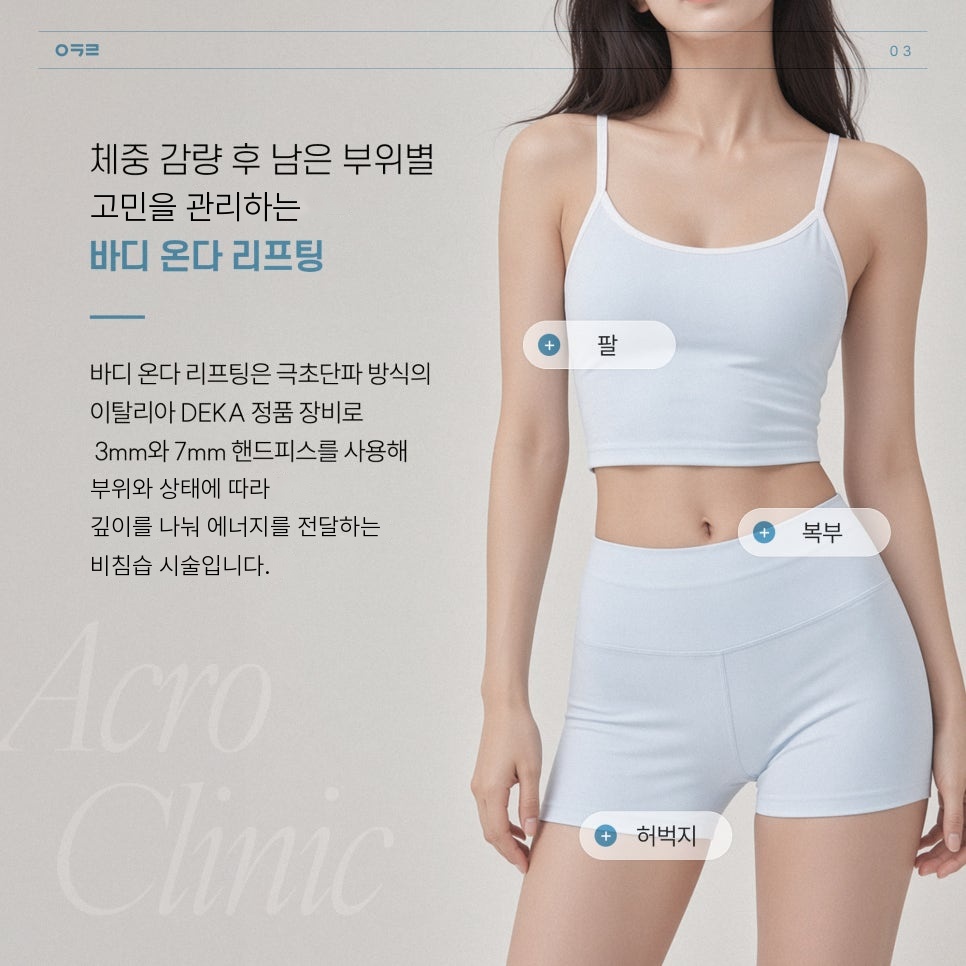
After weight loss with Mounjaro and the like, body lifting more often involves both remaining fat volume and loose skin than the face does.
The back of the upper arm and the lower abdomen in particular are areas that easily stay soft even after weight loss.
For such areas, we mainly consider a combination in which the 7mm addresses the remaining volume and the 3mm addresses surface elasticity.
If you have a fixed date such as a wedding, treatment is often done several times at 3-4 week intervals and the changes appear over several weeks, so we recommend consulting early, counting backward from the date.
If your weight is still changing quickly, it is easier to design if you wait until the changes have settled to some extent, then recheck the area before starting.
Q7. Can it be done for a sagging belly after childbirth?
In people looking for abdominal body lifting after childbirth, the belly often has skin that stretched greatly during pregnancy together with fat that remains in the lower abdomen.
This corresponds to the concern that weight is back but the shape of the belly isn't what it used to be. However, there are things to check first.
· We do not perform treatment while you are breastfeeding. We recommend consulting after you have finished breastfeeding.
· Around a cesarean scar, the area is set after looking at the condition of the scar.
· Diastasis recti, where the middle of the belly looks separated, is a muscle problem and is not a target of ONDA Lifting. In this case, exercise or other treatment may be needed first.
After checking these conditions, we design by dividing 7mm and 3mm according to the ratio of remaining fat and stretched skin.
Q8. What about a sagging jawline or double chin that appeared without weight change?
Sometimes the area under the chin looks thick or the jawline blurs even though weight has not increased.
In many cases the cause is a combination of a small fat volume under the chin and elasticity that declines with age.
In such cases, we divide the face into zones in the design, looking at volume with 7mm for the double chin area and at elasticity with 3mm along the jawline.
A study of submental sagging also reported improvement in the sagging grade 12 weeks after 2 sessions [4].
Q9. How is the treatment performed, and how many sessions are needed?
· Consultation and design — We check the fat volume and elasticity of the area of concern and decide on 3mm, 7mm, and the energy.
· Treatment — We deliver energy area by area while protecting the surface with a cooling tip. You may feel warmth, so we adjust the intensity by watching your response. It takes roughly 10-20 minutes for the face and 20-30 minutes for the body.
· Post-treatment guidance — We explain the reactions, how to care for the area, and the next appointment.
The number of sessions varies by area and condition, and treatment is usually done at 3-4 week intervals (in the studies, at 4-week and 30-day intervals [3,4]).
The specific number of sessions is decided together in consultation.
Q10. What reactions can occur after treatment, and who cannot receive it?
Because it is a non-invasive treatment, most people can carry on with daily life, but the following reactions may occur.
· Relatively common and temporary: redness, swelling, warmth, tenderness, itching, temporary altered sensation
· Rarely reported: blisters, burns, bruising, palpable nodules, pigmentation
Most subside over time, but if blisters form or discomfort continues for more than a few days, please contact us right away.
For about 2 days after treatment, avoid direct sunlight, and avoid saunas and hot baths until the redness has subsided.
In the following cases, we do not perform treatment or we judge it carefully.
· Use of an implanted internal device such as a cardiac pacemaker
· During pregnancy or breastfeeding
· Currently undergoing treatment for a malignant tumor, or a recent history of one
· Skin disease or wounds in the treatment area, or taking anticoagulants, are judged case by case
· Metal implants in the treatment area (artificial joints, metal plates, etc.)
· Foreign material such as fillers or threads in the treatment area, and a keloid tendency, are judged case by case
· Reduced sensation due to diabetic neuropathy and the like (risk of burns because heat cannot be felt)
· If you have had Botox or filler treatment, we proceed after an interval of about 4 weeks.
Especially recommended for
· People whose cheeks have become hollow and jawline blurred after losing weight with Mounjaro or Wegovy
· People bothered by the back of the upper arm and back line ahead of a wedding
· People whose back of the upper arm and lower abdomen remain soft after weight loss
· People who have finished breastfeeding but whose lower abdomen has not returned to its shape after childbirth
· People with no weight change who are bothered by a double chin and sagging jawline
· People who want to look into non-invasive options before surgery or injections
Book a consultation now
ONDA Lifting is a treatment whose design differs from person to person, even for the same area.
In consultation, we check your area of concern directly and decide together whether ONDA Lifting suits you, the depth and number of sessions, and, if needed, herbal medicine and pharmacopuncture as well.
· 📍 480 Gangnam-daero, 2F, Gangnam-gu, Seoul (Sinnonhyeon Station Exit 3, 1-minute walk)
· 📞 02-6925-1175 · Naver booking
· 🕒 Weekdays 10:30-20:30 (lunch 13:00-14:00) / Weekends & public holidays 10:00-15:30
· 🌐 About ONDA Lifting: acrohani.com/ko/onda-lifting/onda-lifting



Thank you.
Treatment effects and recovery time vary from person to person; redness, swelling, warmth, tenderness, and the like may occur, and blisters, burns, nodules, and the like may rarely occur.
Please be sure to have a thorough consultation with our medical staff before treatment.
References
[1] Hoffmann K, et al. Microwave-Energy-Based Device for the Treatment of Cellulite and Localized Adiposity: Recommendations of the "Onda Coolwaves" International Advisory Board. Bioengineering. 2024;11(12):1249. doi:10.3390/bioengineering11121249
[2] DEKA. Onda Coolwaves / Onda PRO product materials — handpiece Pocket (3mm), Shallow (7mm), and Deep (12mm) action depths, energy distribution (about 80% fat layer, about 20% dermis), surface cooling of about 5°C.
[3] Bonan P, Coli F. Results on reduction of subcutaneous adipose tissue using a novel body contouring system based on microwave technology. Dermatologie (Heidelb). 2023. doi:10.1007/s00105-023-05200-y (19 patients, 3 sessions at 4-week intervals)
[4] Zappia E, Del Re C, Tolone M, Bennardo L, Nisticò SP. Treatment of submental skin laxity with a 2.45GHz microwave device. Lasers Med Sci. 2024. doi:10.1007/s10103-024-04270-1 (10 patients, 2 sessions at 30-day intervals, assessed at 12 weeks)