



Hello, this is Dr. Park Ji-seon of ACRO Korean Medicine Clinic.
In weight-loss consultations,
“I’ve been through so many rebounds that I think my body just won’t lose weight anymore”
is something I hear often.
On the day the weight you worked for months to lose comes back, it can feel as if all that effort was for nothing,
and it’s natural to worry that your metabolism might be ruined too.
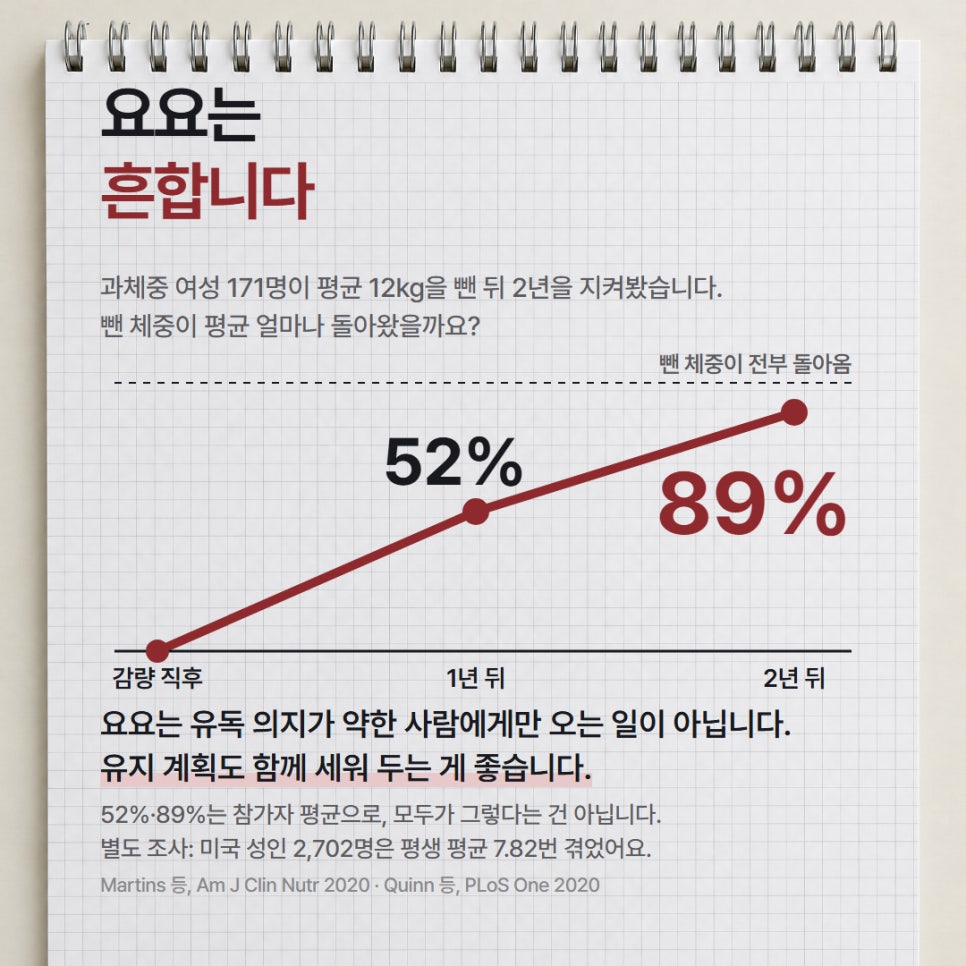
According to a 2020 survey of 2,702 American adults, people who had tried to lose weight reported going through weight regain an average of 7.82 times in their lifetime.
Weight regain is not something that happens only to people with particularly weak willpower.
Putting together the research so far,
fortunately, the evidence that weight regain ruins your metabolism or makes your body resistant to weight loss is weak.
However, that doesn’t mean repeated ups and downs in weight have no effect on health.
So today I’d like to look at what traces weight regain actually leaves on metabolism and body composition,
whether it is really harder to lose weight again after a rebound,
and how far we should take the studies that talk about health risks.
What Is Weight Regain, and How Common Is It?
Weight regain (rebound) is a state in which lost weight comes back and is then lost again, over and over.
In research papers it is called weight cycling,
and the criteria for how many kilograms, how many times, count as weight cycling differ from study to study.
Some studies define it as losing 4.5kg or more 3 or more times; others as a 10% change in body weight 2 or more times.
There are also data on how much lost weight comes back.
In a study published in the American Journal of Clinical Nutrition in 2020,
171 women with overweight lost an average of 12kg and were followed for 2 years, and
on average, 52% of the lost weight had come back after 1 year, and 89% after 2 years.
These numbers are averages across all participants, so they don’t mean every single person returned to their original weight, but
they show that keeping weight off is harder than losing it
Does Your Metabolism Really Get Ruined?
Fortunately, the evidence that repeatedly losing and regaining weight permanently lowers your basal metabolic rate is weaker than you might think.
The broadest summary of this topic is a systematic review published in Current Obesity Reports in 2024.
It gathered 23 studies conducted mostly in healthy adults,
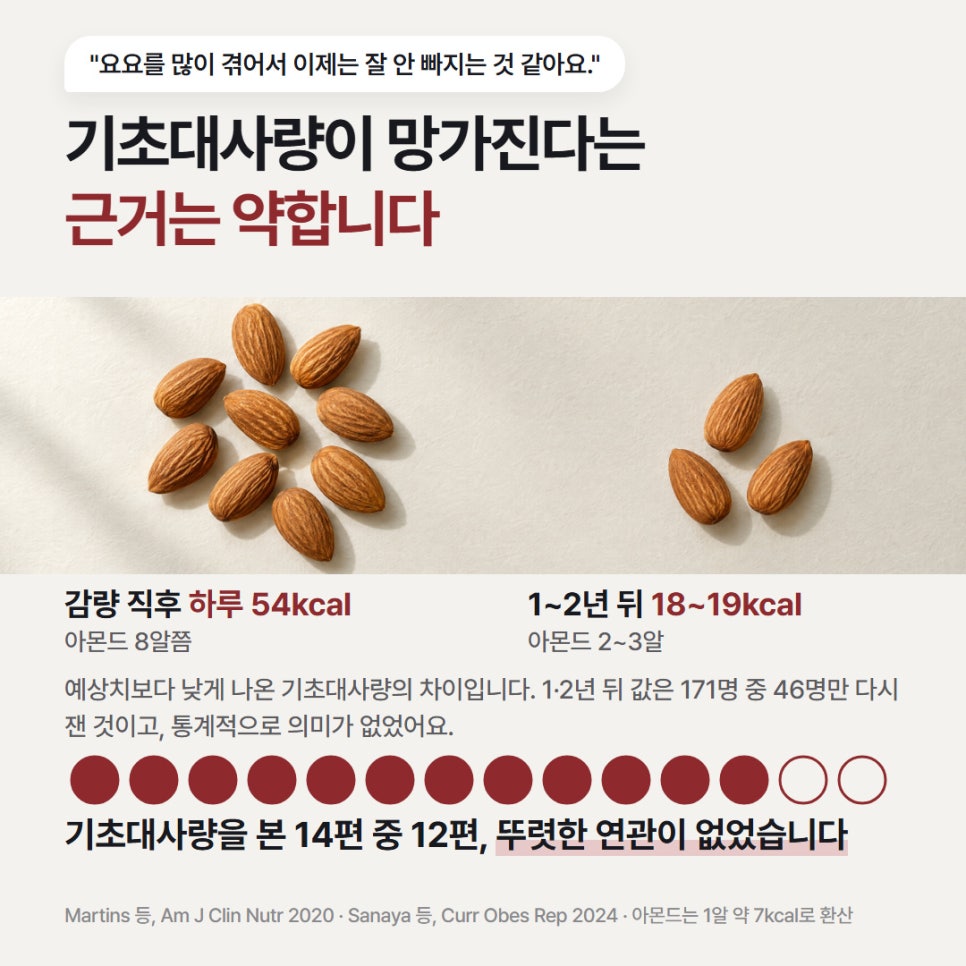
and of the 14 that examined basal metabolic rate, 12 found no clear association between a history of weight cycling and a lower basal metabolic rate.
That doesn’t mean nothing changes right after weight loss, though.
When you lose weight, your body uses less energy because it has become smaller,
and on top of that, there is a phenomenon in which energy use drops a little more than expected; this is called metabolic adaptation.
The 171-person study mentioned above measured this carefully.
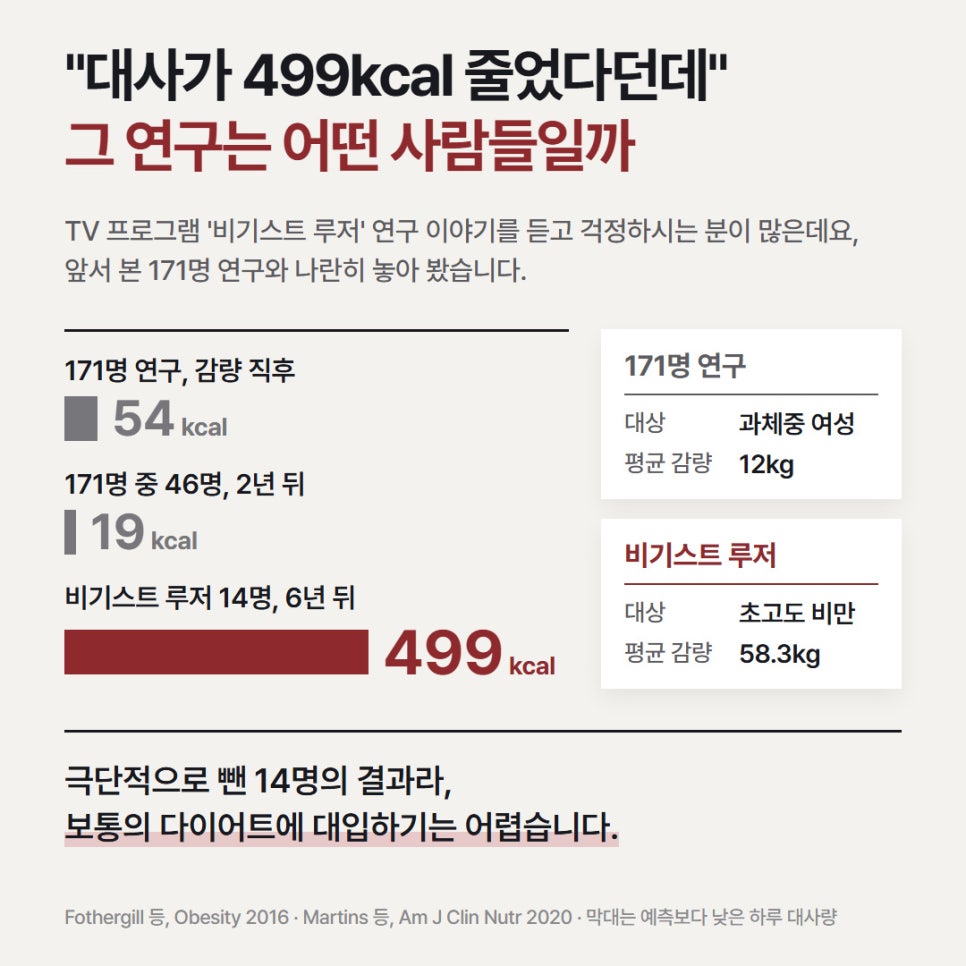
When measured right after weight loss, once body weight had stabilized, basal metabolic rate was 54kcal per day lower than predicted,
but when 46 of them were measured again 1 and 2 years later, the difference had shrunk to 18kcal and 19kcal per day, a level that was not statistically significant.
And this difference was not related to how much weight had come back after 2 years.
A review of 33 studies (2,528 people) published in the British Journal of Nutrition in 2022 reached a similar conclusion.
The better designed the study, the smaller or less significant the metabolic adaptation, and it weakened or disappeared during the period when weight stabilized.
What patients find most surprising here is the size: around 50kcal a day.
That’s a much smaller number than the commonly feared “ruined metabolism where everything you eat turns into fat.”
You may have heard about “The Biggest Loser.”
It’s a 2016 study in which 14 participants of the US TV program lost an average of 58.3kg,
and 6 years later still had metabolic adaptation of 499kcal per day.
The number is large, but it is the result of 14 people with severe obesity who lost weight extremely, so it is hard to apply to ordinary dieting.

Will Your Body Gain Fat More Easily?
Research results are mixed on whether weight regain leads to more body fat and less muscle coming back.
| What was examined | Results | Points to note |
|---|---|---|
| Body fat | Sanaya 2024 review: no increase in 15 of 20 studies | Conflicts with the Mackie review below |
| Body fat and later weight | Mackie 2017 review (31 studies): 11 of 19 reported a correlation with increased body fat or abdominal fat, and 4 of 8 reported a possible later weight gain | The authors themselves stated it was insufficient to draw a conclusion |
| Fat-free mass (muscle) | Sanaya 2024 review: 0 of 18 studies reported a decrease in fat-free mass | Conflicts with the Zamboni review below |
| Muscle recovery | Zamboni 2025 narrative review: less fat-free mass recovered in studies with precise measurement, studies with more cycles, and in older participants | A narrative review, not a systematic review |
| Muscle mass | Rossi 2019: among 207 adults with obesity, the severe weight-cycling group had a 3.8-fold risk of low muscle mass | A single-time-point survey, so cause cannot be determined |
There is also the fat overshoot theory, which holds that more body fat is regained than was lost.
A modeling study published in the International Journal of Obesity in 2020
suggested that the leaner a person was originally, the more body fat they might regain after weight loss,
but it is a hypothesis built on equations, and there are no results yet confirming it by following real people.
Based on research so far, it’s hard to say definitively that “the more rebounds you go through, the more fat increases and muscle decreases,” but
it’s worth remembering that reports of less muscle coming back appear more often with older age and more cycles.
If You’ve Had Weight Regain, Is It Harder to Lose Weight Again?
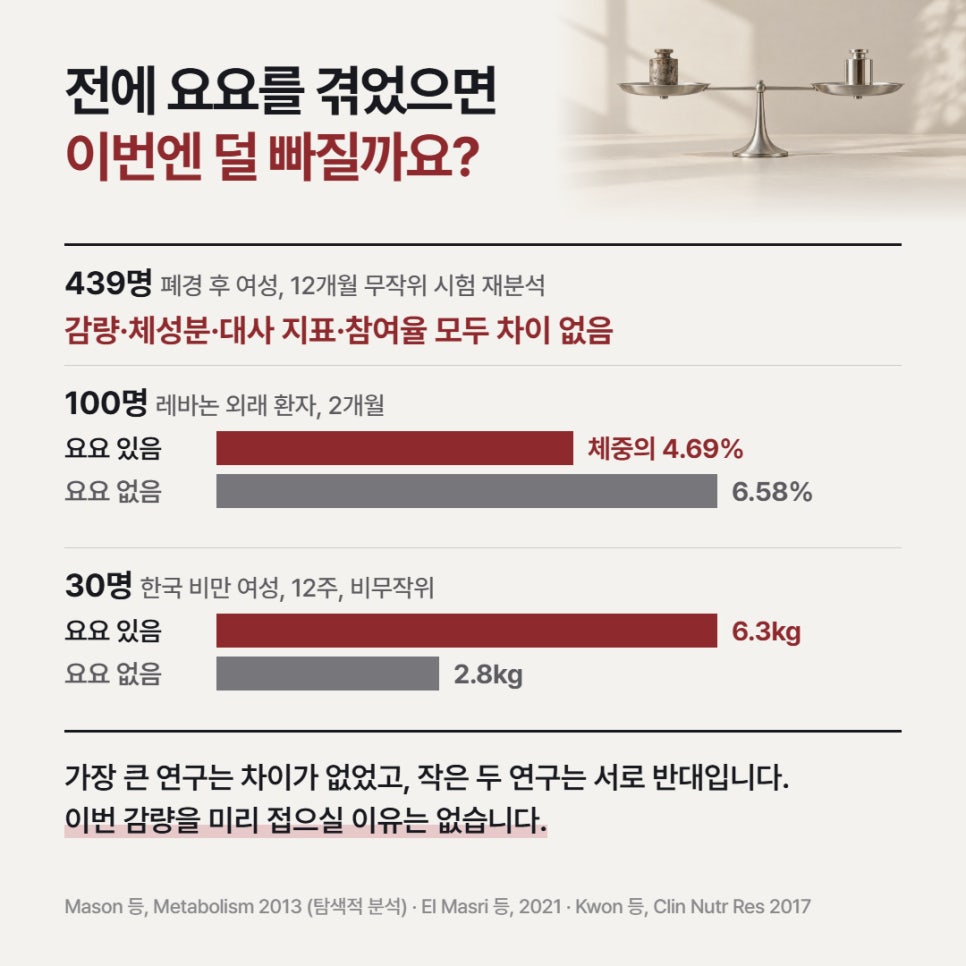
In the largest study, there was no difference in weight-loss results between people who had and had not experienced weight cycling.
This is a study published in Metabolism in 2013,
which re-divided data from a 12-month randomized trial of 439 postmenopausal women with overweight according to their weight-cycling history.
103 had lost 4.5kg or more more than 3 times, and 77 had lost 9.1kg or more more than 3 times;
in both the diet-only group and the diet-plus-exercise group, between those with and without a weight-cycling history,
there was no difference in weight lost, body composition, changes in metabolic markers, or program participation.
Keep in mind that the trial was not designed to answer this question from the start,
that the authors themselves described it as an exploratory analysis, and that only postmenopausal women took part.
There are also opposite results.
In a 2021 study that followed 100 outpatients in Lebanon for 2 months,
the 75 who had experienced weight cycling 2 or more times lost 4.69% of their body weight, while those who had not lost 6.58%.
These are 2-month results with a small number of people.
A 2017 study in which 30 Korean women with obesity followed a 12-week diet and exercise program found the opposite.
The group with a weight-cycling history went from 71.3kg to 65.0kg and the group without went from 71.6kg to 68.8kg — so the weight-cycling group actually lost more.
This study was also small and not randomized.
Looking at the three studies together, there’s no reason to give up in advance on losing weight this time just because you’ve had rebounds before, right?
So Is Weight Regain Fine Then?
It’s hard to answer “yes, it’s fine” to this question.
That’s because large observational studies have observed more diabetes, high blood pressure, cardiovascular disease, and death in people whose weight fluctuated greatly.
Let’s start with Korean data.
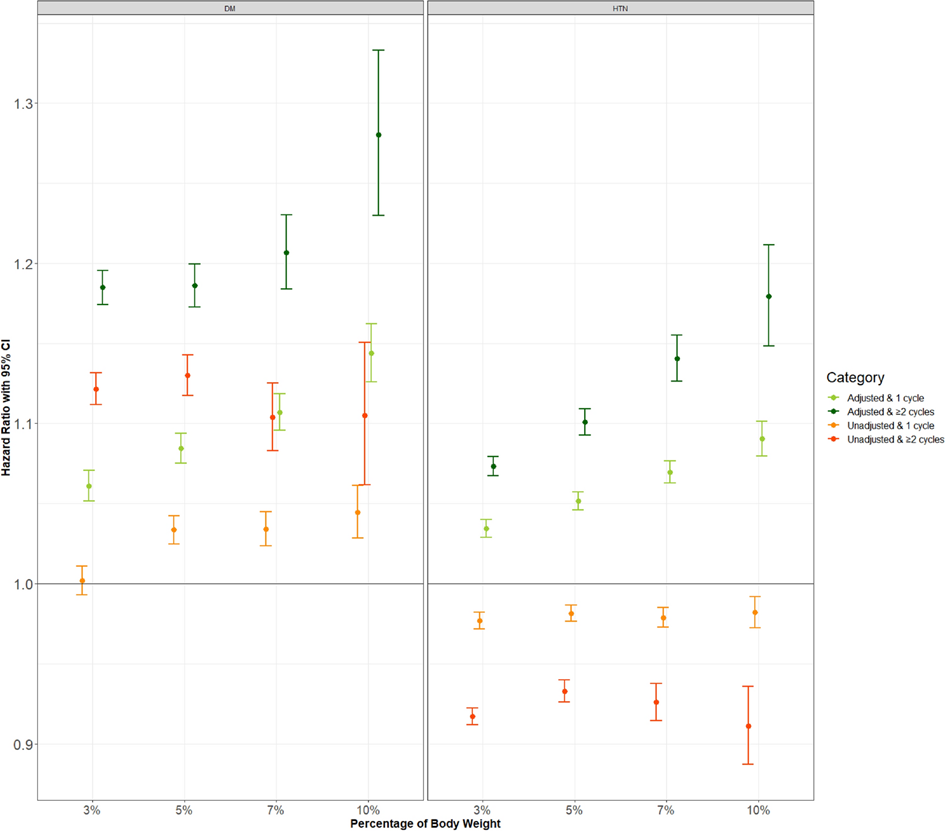
Source: Kim et al., Scientific Reports 2022 / Left: diabetes, right: high blood pressure. The horizontal axis is the range of weight fluctuation,
dark green is 2 or more times, light green is once. A hazard ratio greater than 1 means a higher observed risk
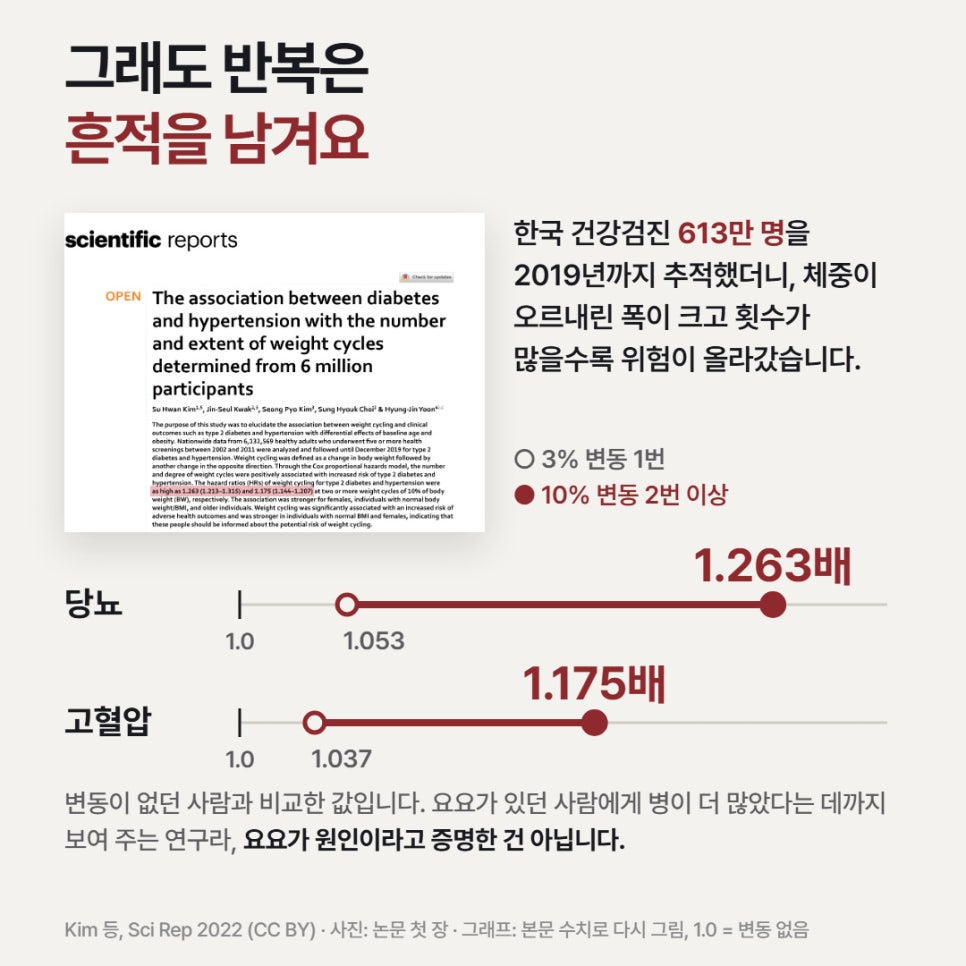
In a study published in Scientific Reports in 2022,
6,132,569 adults who had national health insurance checkups 5 or more times were followed through 2019.
People whose weight had gone up or down by more than 10% on 2 or more occasions
were observed to have a 1.263-fold risk of developing type 2 diabetes and a 1.175-fold risk of high blood pressure compared with people who had no such episodes,
and the larger the fluctuation and the more frequent it was, the higher the risk.
Hazard ratios and relative risks are numbers meaning “X times the comparison group,” so they don’t show how many people actually developed the disease.
Unfortunately, the 6.13-million-person study did not report incidence rates by group, but we can estimate them from other data.
| Study | Observed results | Points to note |
|---|---|---|
| Kim 2022, 6,132,569 people in Korea | 10% weight change 2 or more times: diabetes 1.263×, high blood pressure 1.175× | Incidence rates by group not reported |
| Zou 2021 meta-analysis, 14 cohorts, 253,766 people | Diabetes 1.23× | Not significant for BMI under 25 or 30 and over, or in the analysis limited to high-quality studies |
| Zou 2019 meta-analysis, 23 studies, 441,199 people | All-cause death 1.41×, cardiovascular death 1.36×, high blood pressure 1.35× | Publication bias in the mortality analysis |
| Massey 2023 meta-analysis, 23 studies, 15.38 million people | Cardiovascular events 1.27× | Very large differences between studies |
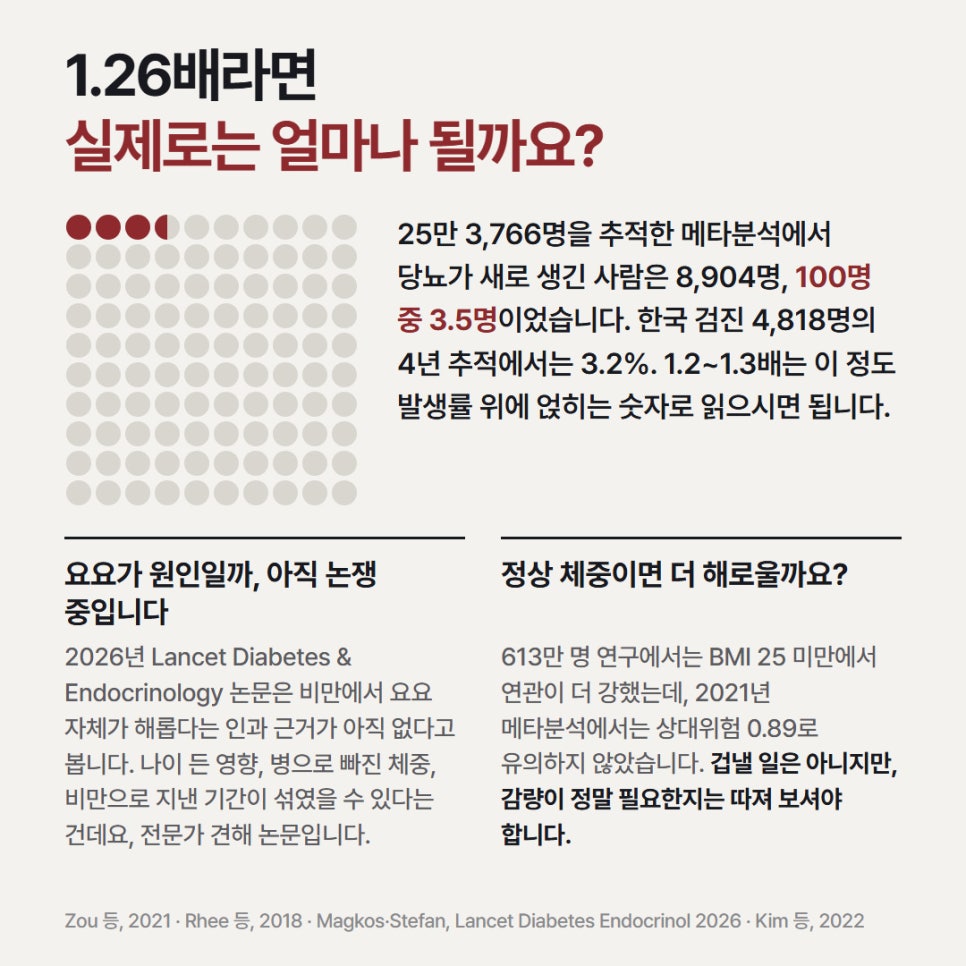
Of the 253,766 people in the 2021 meta-analysis in the table above, 8,904 — 3.5% — newly developed diabetes during follow-up,
and in a 2018 study that followed 4,818 Korean checkup participants for 4 years, 3.2% developed diabetes.
In that study, the top third with the largest weight fluctuation had 1.86 times more diabetes than the bottom third with the smallest.
You can read the 1.2- to 1.3-fold higher risk seen in people with weight cycling as a figure added on top of incidence rates of this level.
And these are all observational studies.
Rather than concluding that weight fluctuation caused disease, it’s best understood as meaning that disease occurred more often in people whose weight went up and down.
A 2026 paper by Magkos and Stefan in the Lancet Diabetes & Endocrinology points out exactly this.
It argues that there is as yet no causal evidence that weight cycling itself is harmful in people with obesity,
that the observed associations may reflect a mix of factors such as weight changes that come with aging,
unintentional weight loss due to illness, and the length of time spent with obesity,
and that the benefits of losing weight, even intermittently, outweigh the risks;
however, since it is an expert opinion paper rather than a systematic review, it is too early to consider the debate settled.
There’s one point people of normal weight may especially wonder about.
In the 6.13-million-person study, the association was stronger in women and in those with a BMI under 25,
and the authors wrote that cosmetic weight loss in people without obesity may be more harmful.
However, in a subgroup analysis of the 2021 meta-analysis, the relative risk for BMI under 25 was 0.89, which was not significant,
and when only the 12 higher-quality studies were pooled, it was 0.94, with no significant association.
Whether weight cycling is more harmful at a normal weight is answered differently by different studies.
So there’s no need to panic right away, but if you are at a normal weight, first consider whether you really need to lose weight,
and if you do, it’s better to make a maintenance plan from the very start.

If You’re Starting Again, Pay Special Attention to These
1. If you’re at a normal weight, first check whether you need to lose weight
Before lowering your target further based only on the number on the scale, it’s better to first look at your body composition, health status, and why you want to lose weight.
As we saw, studies differ on whether repeated weight loss is more harmful at a normal weight, but it’s worth considering whether you really need to shake up your overall weight once again.
If a specific area such as the upper arms or abdomen is your concern, rather than losing more weight,
a local treatment such as lipolytic pharmacopuncture (ACRO Cut) or ONDA Lifting that refines just that area may be more suitable,
and even if your weight is normal, if you have a lot of visceral fat, it may be worth considering weight loss.
2. Make a maintenance plan when you start
In the 171-person study, 89% of the lost weight came back within 2 years.
Rather than a diet you just endure for a few weeks, decide from the start on eating and activity habits you can continue after the weight loss is over,
and write down in advance what situations caused your maintenance to fall apart last time.
3. Protect your muscle with strength training and protein
Reports of less muscle coming back appear more often with older age and more weight cycles.
Rather than just bringing your weight down quickly, aim to reduce fat-free mass loss by keeping up strength training and including a protein dish at every meal.
4. Don’t blame yourself
In the US survey mentioned earlier, the more weight cycles people had, the higher their depressive symptoms,
and the degree to which they internalized weight stigma partly explained that association.
Because it was a single-time-point survey, cause and effect can’t be determined, but
when your weight comes back, writing down what was difficult will help your next attempt far more than being hard on yourself.
To Sum Up
1. American adults who had tried to lose weight reported an average of 7.82 lifetime rebounds, and in a study of 171 women with overweight, 52% of the lost weight came back within 1 year and 89% within 2 years
2. In 12 of 14 studies that examined basal metabolic rate, there was no deterioration after weight cycling, and once weight stabilized, metabolic adaptation shrank to 18–19kcal per day
3. Results on body fat and muscle are mixed: there is a review in which 15 of 20 studies found no increase in body fat, alongside a review in which 11 of 19 studies reported a correlation with an increase
4. In an analysis of 439 postmenopausal women, there was no difference in weight loss by weight-cycling history, while in a 100-person study there was a difference, 4.69% vs. 6.58%
5. In an observational study of 6,132,569 Koreans, 10% weight change 2 or more times was associated with a 1.263-fold risk of diabetes and a 1.175-fold risk of high blood pressure. Whether it is the cause is still debated
6. If you’re at a normal weight, first check whether you need to lose weight, and if you do, it’s better to make a maintenance plan from the start
Going through a few rebounds doesn’t turn your body into one that can’t lose weight.
However, we also can’t say that repeatedly losing and regaining leaves no trace on the body,
so this time, try planning the weight-loss period and the life that follows as one package rather than separately.
At ACRO Korean Medicine Clinic, we look at your previous weight-loss history, body composition, and eating and lifestyle patterns together to review your pace of weight loss and maintenance plan.
About ACRO Korean Medicine Clinic
📍 Location: 1 min walk from Sinnonhyeon Station Exit 3 (2F Boratial Bldg., 480 Gangnam-daero, Gangnam-gu, Seoul)
📞 Consultations: search “acrohani” on KakaoTalk
🌐 Website: https://acrohani.com/en
📝 Naver reviews 1,000+ (9.5★) | Gangnam Unni reviews 500+ (9.6★)
Hours: Weekdays 10:30–20:30 (lunch 13:00–14:00) / Weekends & public holidays 10:00–15:30 (no lunch break)
This article is intended to provide general medical information and does not replace individual diagnosis or treatment.
The research results cited are values observed in the participants of those studies.
If you have symptoms, please see a doctor at a nearby medical institution.
References
El Masri, D., et al. "Relationship between Multiple Weight Cycles and Early Weight Loss in Patients with Obesity: A Longitudinal Study." Eating and Weight Disorders, vol. 26, no. 6, 2021, pp. 2083-2087.
Fothergill, E., et al. "Persistent Metabolic Adaptation 6 Years after 'The Biggest Loser' Competition." Obesity, vol. 24, no. 8, 2016, pp. 1612-1619.
Jacquet, P., et al. "How Dieting Might Make Some Fatter: Modeling Weight Cycling toward Obesity from a Perspective of Body Composition Autoregulation." International Journal of Obesity, vol. 44, no. 6, 2020, pp. 1243-1253.
Kim, S. H., et al. "The Association between Diabetes and Hypertension with the Number and Extent of Weight Cycles Determined from 6 Million Participants." Scientific Reports, vol. 12, no. 1, 2022, p. 5235.
Kwon, H. N., et al. "Effect on 12-Week Intensive Dietary and Exercise Program on Weight Reduction and Maintenance in Obese Women with Weight Cycling History." Clinical Nutrition Research, vol. 6, no. 3, 2017, pp. 183-197.
Mackie, G. M., et al. "Does Weight Cycling Promote Obesity and Metabolic Risk Factors?" Obesity Research & Clinical Practice, vol. 11, no. 2, 2017, pp. 131-139.
Magkos, F., and N. Stefan. "Is Weight Cycling Clinically Harmful?" The Lancet Diabetes & Endocrinology, vol. 14, no. 7, 2026, pp. 594-607.
Martins, C., et al. "Metabolic Adaptation Is Not a Major Barrier to Weight-Loss Maintenance." The American Journal of Clinical Nutrition, vol. 112, no. 3, 2020, pp. 558-565.
Mason, C., et al. "History of Weight Cycling Does Not Impede Future Weight Loss or Metabolic Improvements in Postmenopausal Women." Metabolism, vol. 62, no. 1, 2013, pp. 127-136.
Massey, R. J., et al. "Weight Variability and Cardiovascular Outcomes: A Systematic Review and Meta-Analysis." Cardiovascular Diabetology, vol. 22, no. 1, 2023, p. 5.
Nunes, C. L., et al. "Does Adaptive Thermogenesis Occur after Weight Loss in Adults? A Systematic Review." British Journal of Nutrition, vol. 127, no. 3, 2022, pp. 451-469.
Quinn, D. M., et al. "Trying Again (and Again): Weight Cycling and Depressive Symptoms in U.S. Adults." PLoS One, vol. 15, no. 9, 2020, p. e0239004.
Rhee, E. J., et al. "Increased Risk of Diabetes Development in Individuals with Weight Cycling over 4 Years: The Kangbuk Samsung Health Study." Diabetes Research and Clinical Practice, vol. 139, 2018, pp. 230-238.
Rossi, A. P., et al. "Weight Cycling as a Risk Factor for Low Muscle Mass and Strength in a Population of Males and Females with Obesity." Obesity, vol. 27, no. 7, 2019, pp. 1068-1075.
Sanaya, N., et al. "The Physiological Effects of Weight-Cycling: A Review of Current Evidence." Current Obesity Reports, vol. 13, no. 1, 2024, pp. 35-50.
Zamboni, M., et al. "Weight Cycling and Its Effects on Muscle Mass, Sarcopenia and Sarcopenic Obesity." Reviews in Endocrine and Metabolic Disorders, vol. 26, no. 5, 2025, pp. 767-783.
Zou, H., et al. "Association between Weight Cycling and Risk of Developing Diabetes in Adults: A Systematic Review and Meta-Analysis." Journal of Diabetes Investigation, vol. 12, no. 4, 2021, pp. 625-632.
Zou, H., et al. "Body-Weight Fluctuation Was Associated with Increased Risk for Cardiovascular Disease, All-Cause and Cardiovascular Mortality: A Systematic Review and Meta-Analysis." Frontiers in Endocrinology, vol. 10, 2019, p. 728.