
As the great national holiday Chuseok approaches, the dining table scene changes. With japchae, assorted jeon, galbijjim, and songpyeon and sikhye for dessert, a single meal can contain calories equivalent to a whole day's worth. "How many jeon and songpyeon can I eat?" If you're on a diet, this worry often comes first. In this article, we will list 10 representative holiday foods in order of lowest calories and also discuss the order in which a dieter might prepare and eat them.
Even among foods served on the holiday table, there can be considerable calorie variation depending on the type. The table below organizes them from lowest to highest based on 100g, with the lightest namul (60kcal) and the heaviest yakgwa (420kcal) differing by nearly 7 times.
| Food | Calories per 100g | Based on one serving |
|---|---|---|
| Spinach/Bracken Namul (blanched) | Approx. 60-80kcal | 1 plate approx. 60kcal |
| Hobak-jeon (Zucchini Pancake) | Approx. 122kcal | 150g approx. 208kcal |
| Dongtae-jeon (Pollack Pancake) | Approx. 180kcal | 150g approx. 268kcal |
| Songpyeon (Rice Cake) | Approx. 224-232kcal | 1 piece (20g) approx. 46kcal |
| Donggeurang-ttaeng (Meatball Pancake) | Approx. 207-309kcal | 150g approx. 309kcal |
| Japchae (Glass Noodle Stir-fry) | Approx. 310kcal | 200g approx. 291kcal |
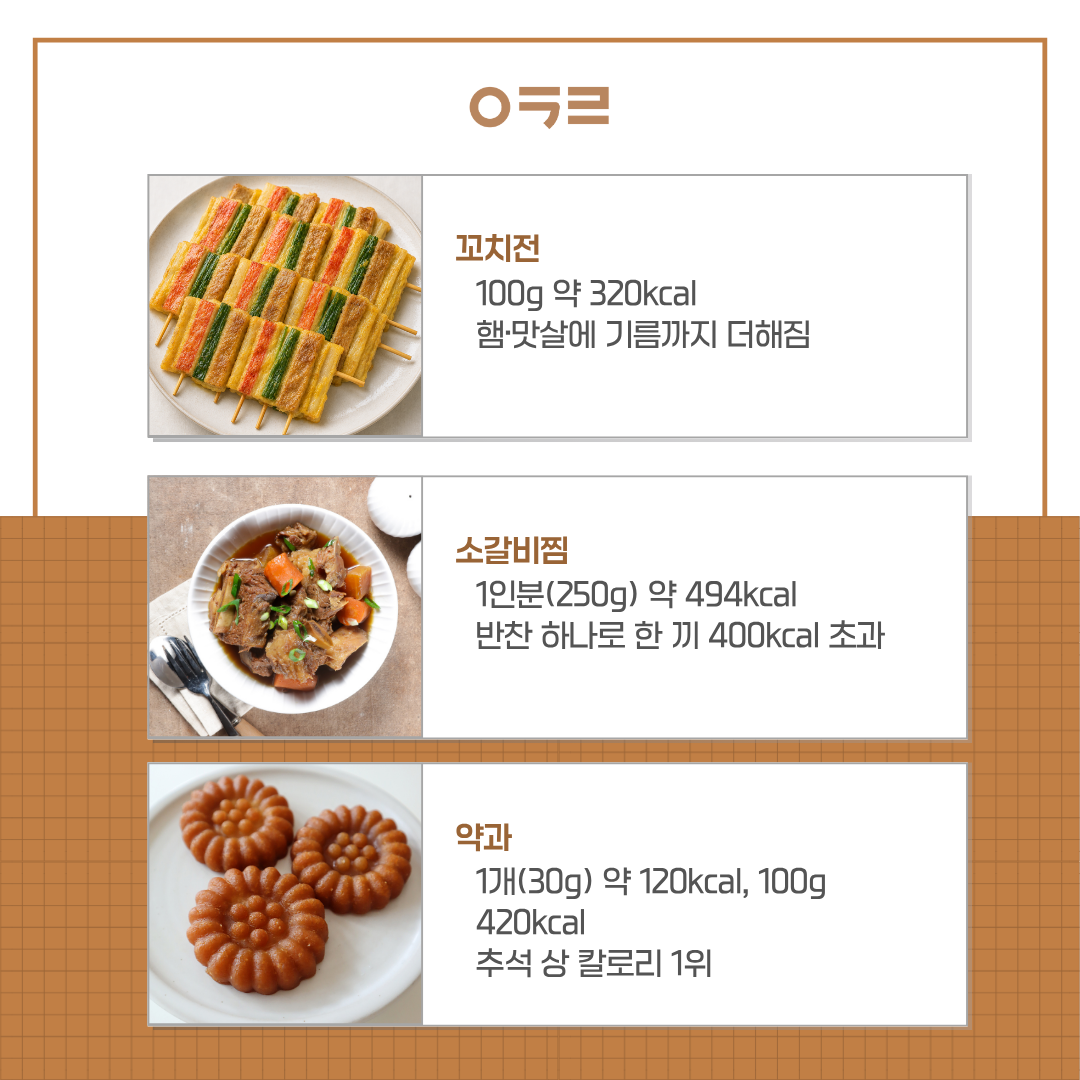
| Sogalbijjim (Braised Beef Short Ribs) | Approx. 340kcal | 250g approx. 494kcal |
| Yakgwa (Honey Cookie) | Approx. 420kcal | 1 piece (30g) approx. 120kcal |
| Sikhye (Sweet Rice Punch) | Approx. 38kcal (100ml) | 1 can (238ml) approx. 90kcal |
※ The 100g basis is from Asan Medical Center Nutrition Team and the Ministry of Food and Drug Safety data, and the serving size is based on the Ministry of Food and Drug Safety Food Nutrition Component DB and fatsecret. The actual calorie intake may vary slightly from the figures above as a reference value, as the amount of oil and sugar added differs in each household.
Namul and Jeon: How to choose in order of lightness
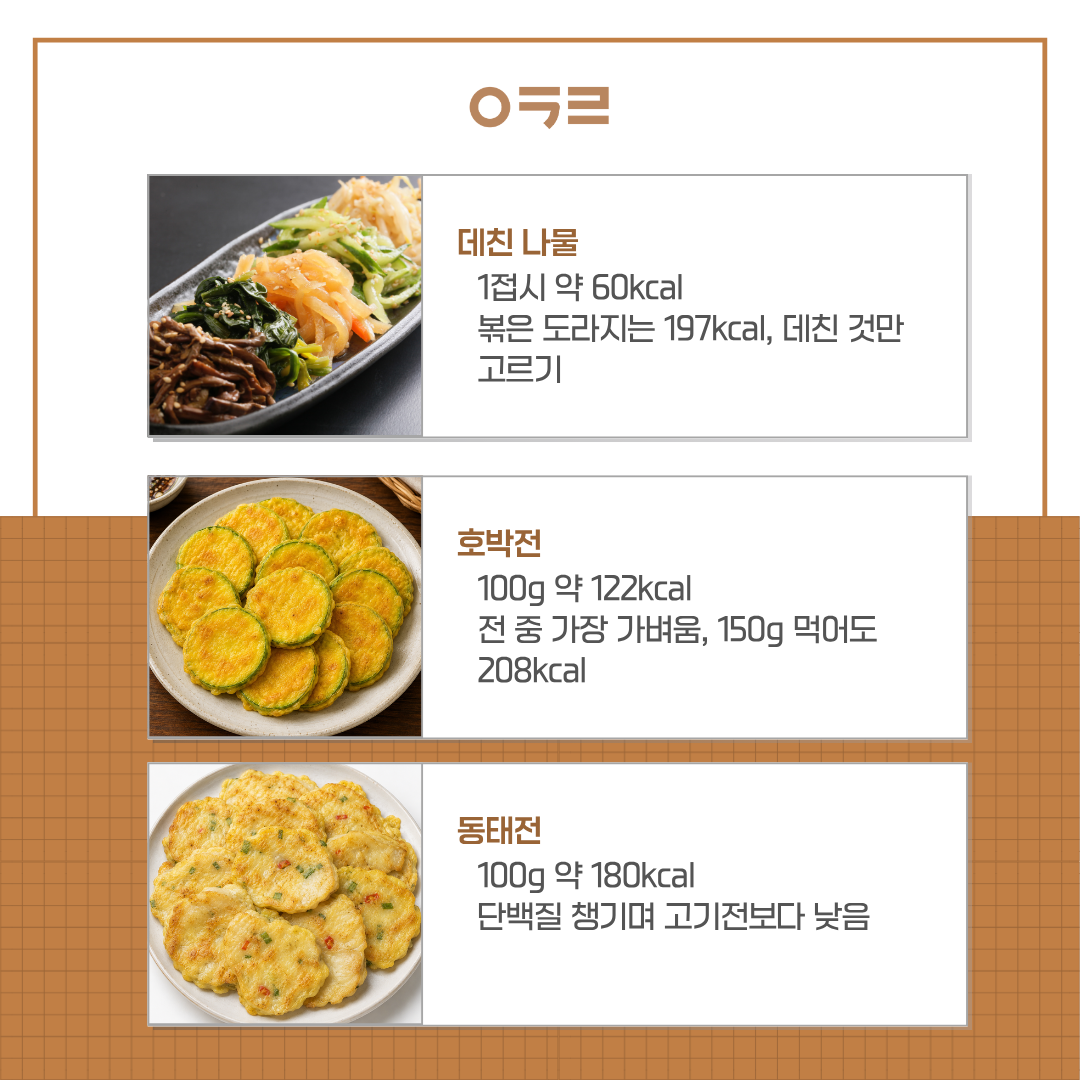
Blanched and seasoned spinach and bracken namul are the lightest side dishes on the Chuseok table, at about 60kcal per serving. They are rich in dietary fiber, so eating them first may help reduce the amount of jeon and meat consumed later. However, be aware that even among namul, stir-fried doraji namul (bellflower root) can be over three times heavier than blanched namul, at about 197kcal per serving. Among jeon, hobak-jeon is the lowest at about 122kcal per 100g. This is because zucchini itself has a high water content and a thin batter, so it absorbs less oil. Even eating 150g may be around 208kcal. Dongtae-jeon is about 180kcal per 100g. As it is a white fish, it provides protein and may be lighter than meat jeon. It may be more advantageous to fry it thinly. In contrast, donggeurang-ttaeng, made with minced pork and tofu coated in egg and flour, may be the heaviest of the three types of jeon at about 309kcal per 150g.
Songpyeon is smaller, making it potentially more dangerous
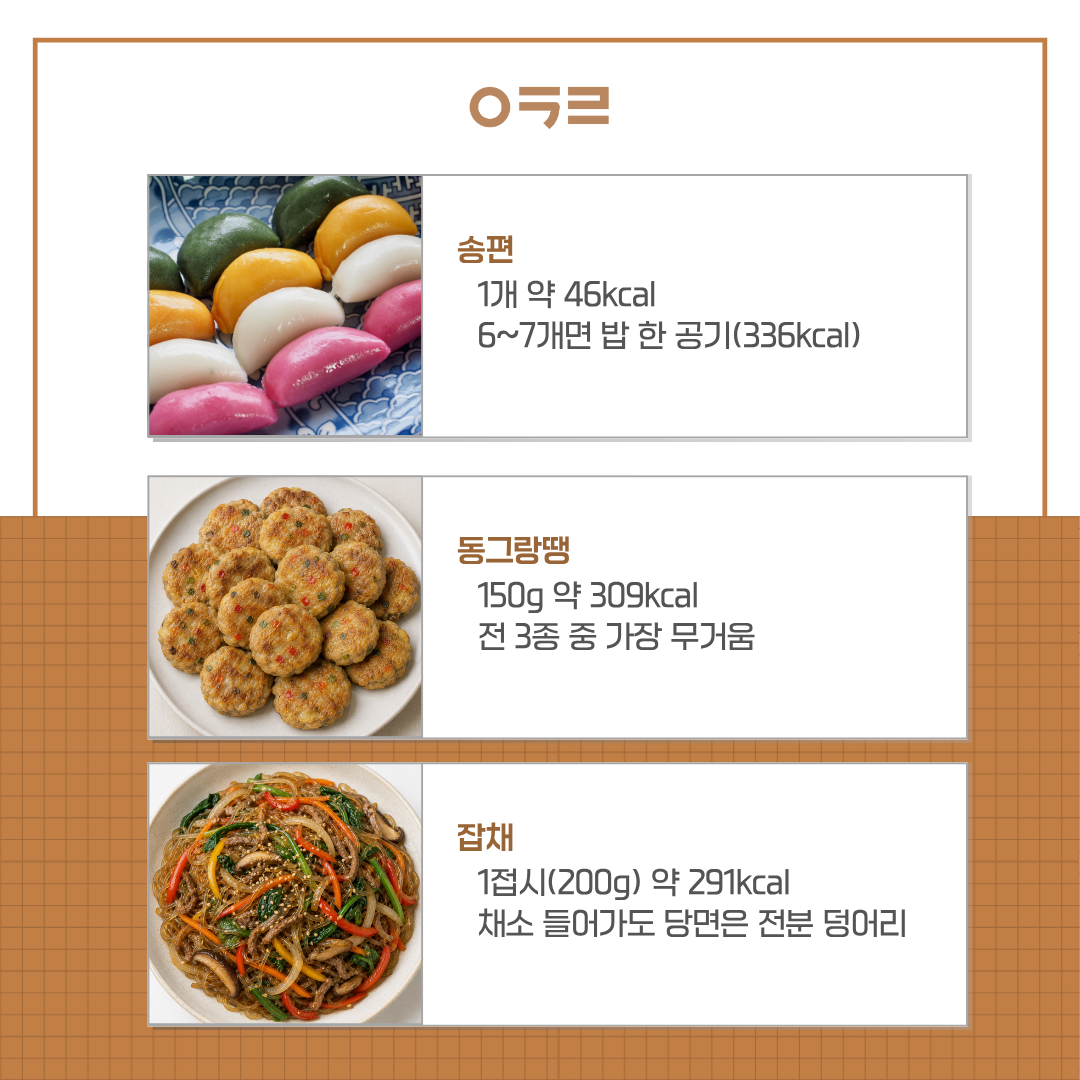
One piece of songpyeon (20g) is about 46kcal, and 100g (4-5 pieces) may be about 224-232kcal. Compared to one bowl of rice (210g, about 336kcal), 6-7 pieces of songpyeon may be equivalent to one bowl of rice. Because of their small size, it's easy to keep saying "just one more," and at dessert time, these calories accumulate purely as additional intake. It may be better to decide on a limit of two pieces and put them on your plate first. Kong-songpyeon (bean songpyeon) may be slightly lighter than sesame or honey songpyeon because the filling is less sweet.
Japchae, Galbijjim, Yakgwa: High-calorie section extending to dessert
Japchae may look light due to its many vegetables, but its main ingredient, glass noodles, are a starch-heavy food. One plate (200g) may be about 291kcal, similar to meat jeon. It may be better to pick out the garnishes (mushrooms, spinach, carrots, meat) first and reduce the amount of glass noodles to half a plate. Sogalbijjim is about 340kcal per 100g, and one serving (250g) may be about 494kcal, making it a heavy side dish that can exceed the recommended calorie intake for one meal (400kcal). This is because the rib cut itself is fatty, and it absorbs sugar and soy sauce seasoning. Just taking two pieces and removing the attached white fat may significantly lower the perceived calorie intake. Yakgwa has the highest calories among Chuseok foods, at about 420kcal per 100g (2-3 pieces), and even one piece (30g) may be about 120kcal. This is because fat and sugar are incorporated simultaneously during the process of frying the flour dough and then soaking it in jocheong (grain syrup). Finishing with one piece and instead having a quarter of a pear (about 150g, about 87kcal) may satisfy the sweet craving and reduce the likelihood of reaching for a second one. Sikhye is about 90kcal per can (238ml). As the sugar from rice grains and malt enters the body as a liquid, it can accumulate calories without providing much satiety. It may be better to reduce it to half a paper cup (100ml) or switch to a zero-calorie product.
How a dieter can prepare a Chuseok meal
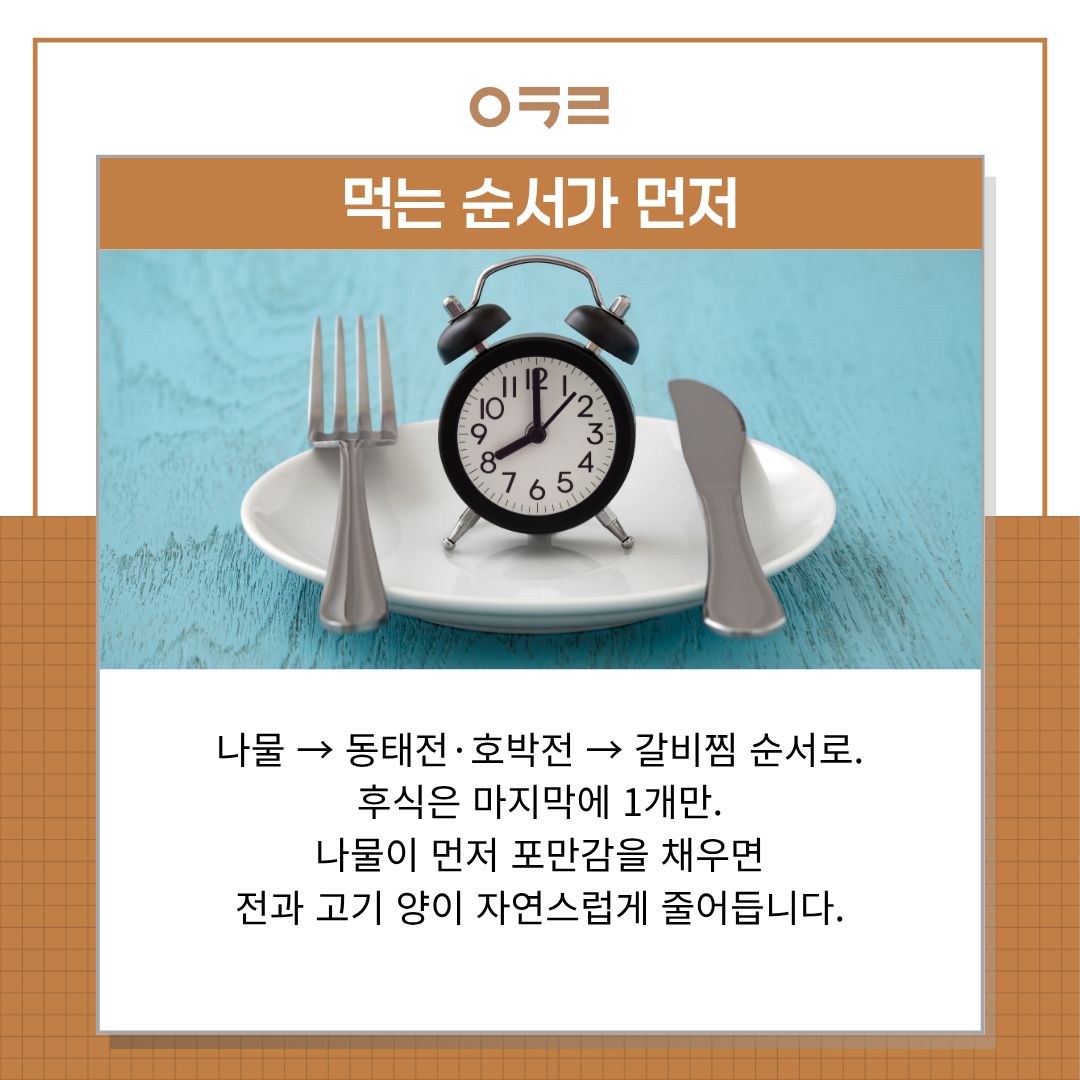
The eating order may be namul → dongtae-jeon/hobak-jeon → galbijjim, and only one dessert is chosen at the end. The namul eaten first may provide a feeling of fullness, naturally reducing the amount of jeon and meat consumed later. Conversely, if galbijjim and japchae are picked first, namul may be overlooked.
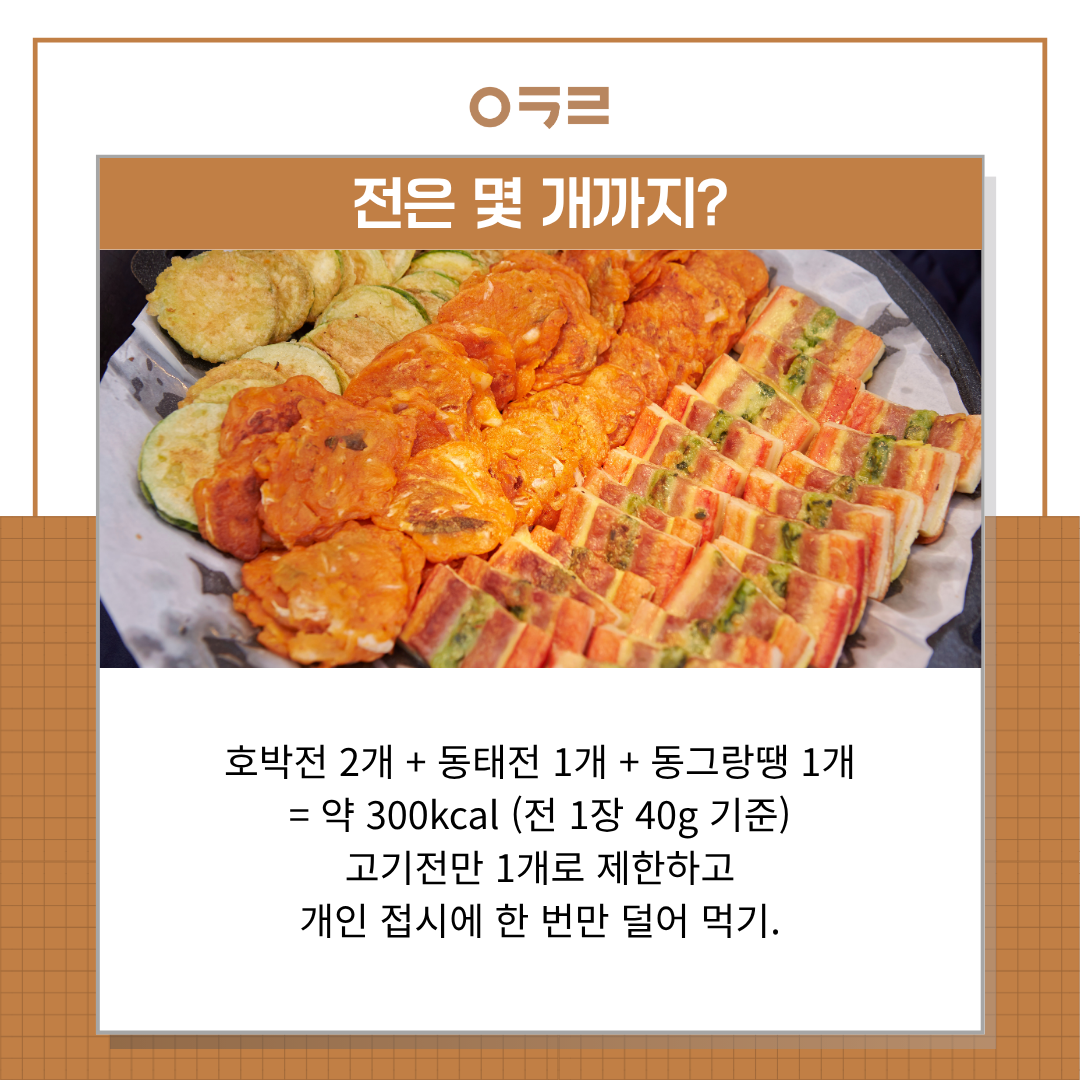
It may be good to taste various types of jeon, but limit meat jeon (donggeurang-ttaeng) to one piece. Two hobak-jeon, one dongtae-jeon, and one donggeurang-ttaeng combined may be around 300kcal. The key is to serve jeon onto your personal plate only once and avoid continuously picking from the large serving plate.
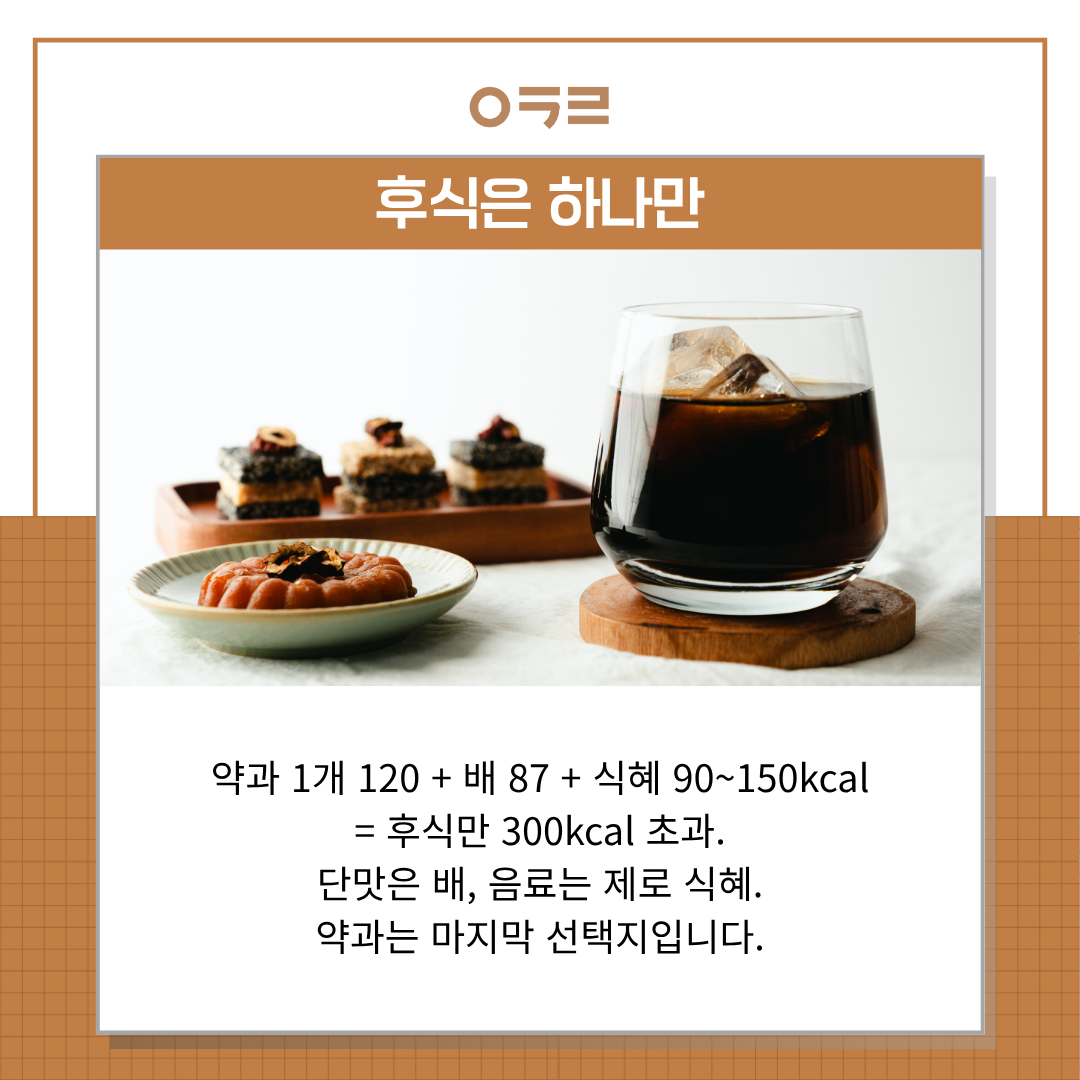
If you eat one yakgwa (120kcal), a quarter of a pear (87kcal), and one cup of sikhye (90-150kcal) for dessert, that alone can exceed 300kcal, so it may be better to choose only one of the three. For example, if you need sweetness, choose pear; if you need something to chew, choose two songpyeon; if you crave a drink, choose zero sikhye.
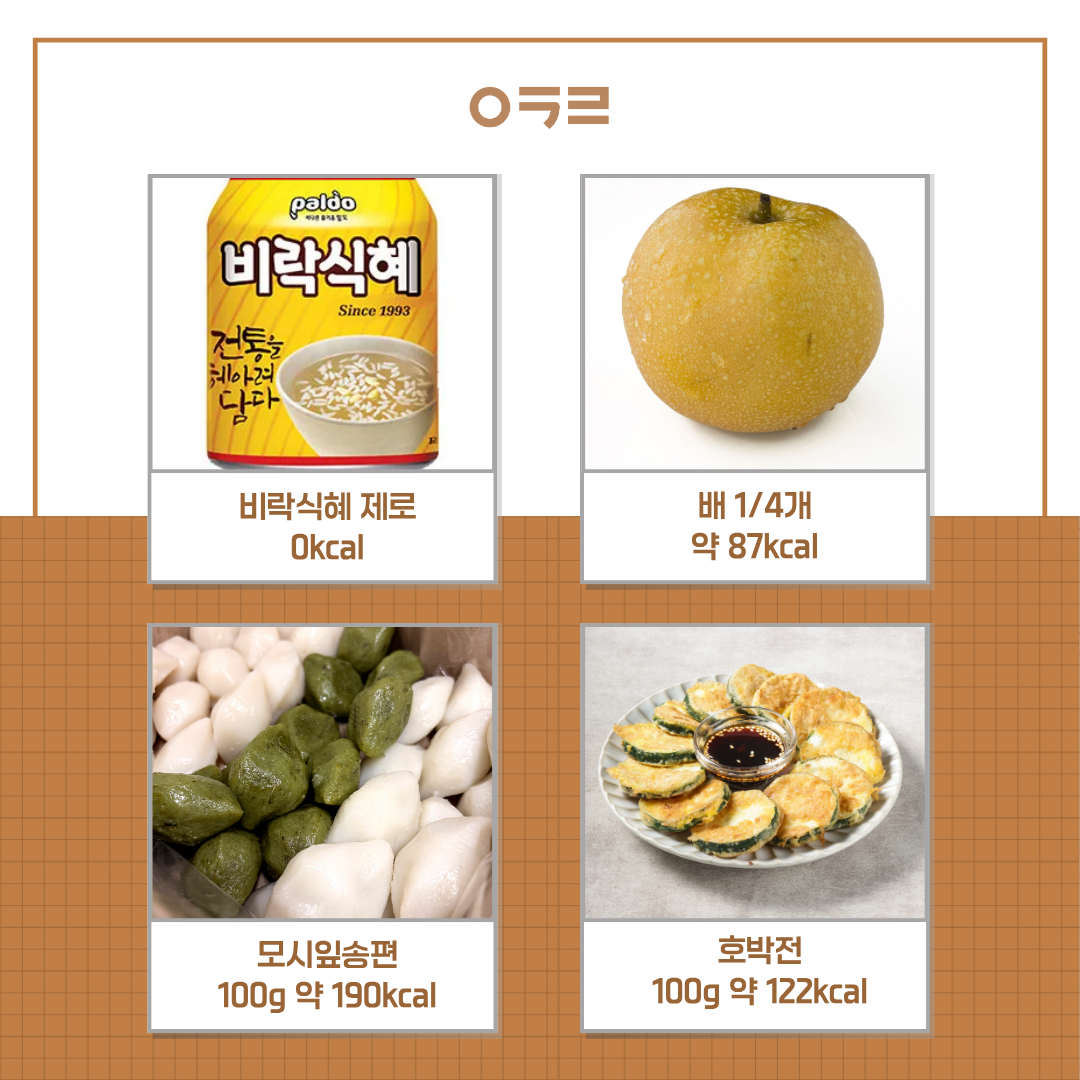
Even by keeping the meal composition as is and only changing a few desserts and drinks, you may be able to cut over 100kcal. Switching to zero sikhye (1 can 238ml, 0kcal) may save 90kcal compared to regular sikhye. Choosing a quarter of a pear (about 87kcal) instead of yakgwa may also provide hydration and dietary fiber. Mosit-ip songpyeon (mugwort leaf songpyeon) is about 190kcal per 100g, which is about 40kcal lower than white songpyeon (about 232kcal), and it also adds dietary fiber.
Summary
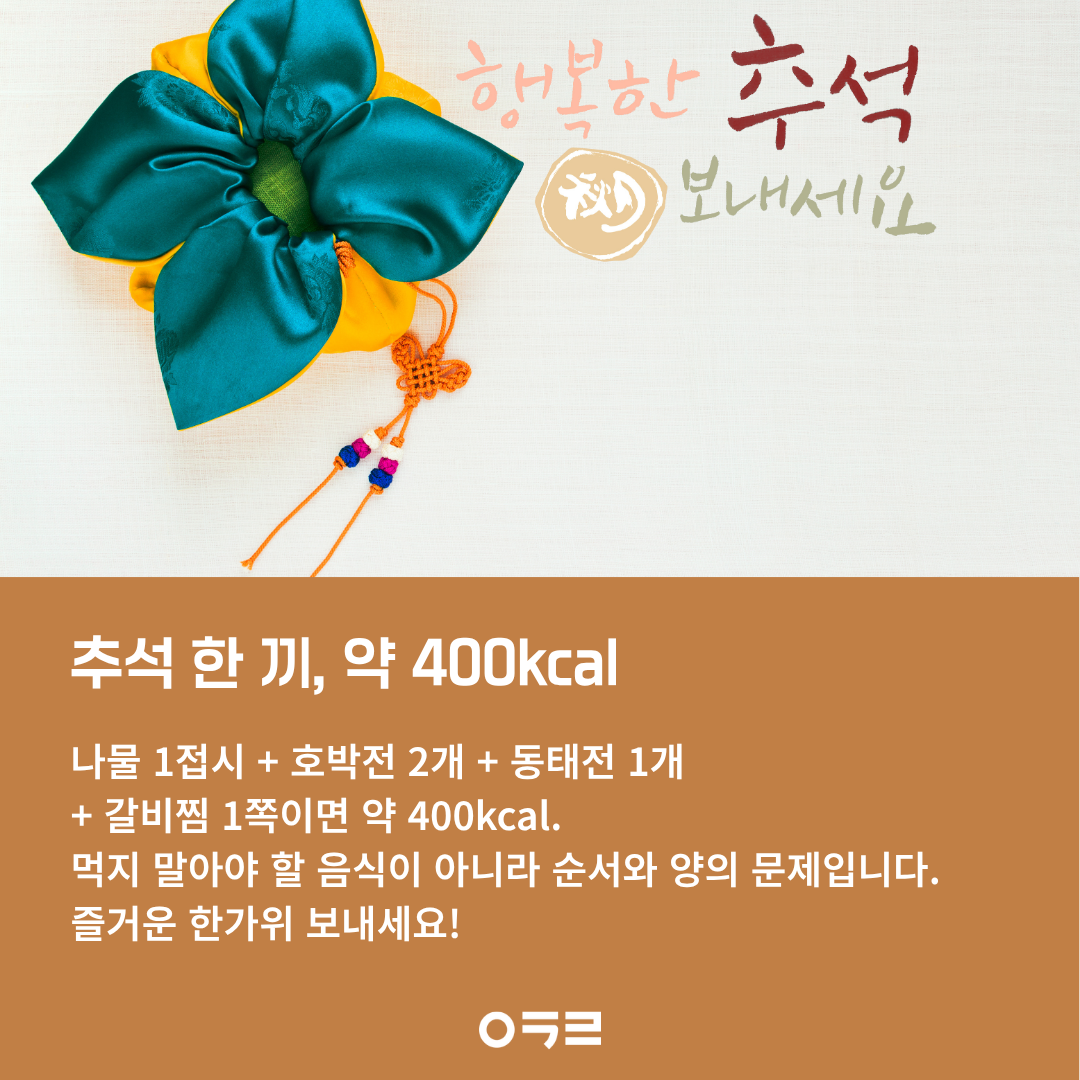
Looking at the order in the table again, namul, hobak-jeon, and dongtae-jeon are on the lighter side, while songpyeon, donggeurang-ttaeng, japchae, sogalbijjim, and yakgwa are on the heavier side. Remembering this structure may make it much easier to decide what to serve first at the table. This means namul and hobak-jeon are foods that can be picked without much concern, while yakgwa and galbijjim are foods for which the quantity should be decided in advance. If you wish to adhere to the recommended calorie intake of 400kcal per meal while dieting, a combination of one plate of namul (about 60kcal), two hobak-jeon (about 100kcal), one dongtae-jeon (about 70kcal), and one piece of galbijjim (50g, about 170kcal) could be an example. For the entire day, you may aim for around 1,200-1,500kcal. Ultimately, holiday food is not something to be avoided, but something whose order and quantity can be adjusted. The simple habit of filling your plate with namul first and saving yakgwa for just one piece at the very end may significantly reduce the burden you face on the scale after the holidays.
KakaoTalk Consultation: Search "acrohani" / Website: https://acrohani.com/ / 2nd floor, 480 Gangnam-daero, 1 minute walk from Sinnonhyeon Station Exit 3
Reviewed by: Lim Joo-hyuk, Chief Director · Chief Director of Acro Korean Medicine Clinic Last reviewed 2026-09-20
This article is for general information purposes only, and results may vary depending on individual eating habits and constitution. Please consult a specialist for accurate dietary and weight management guidance.