
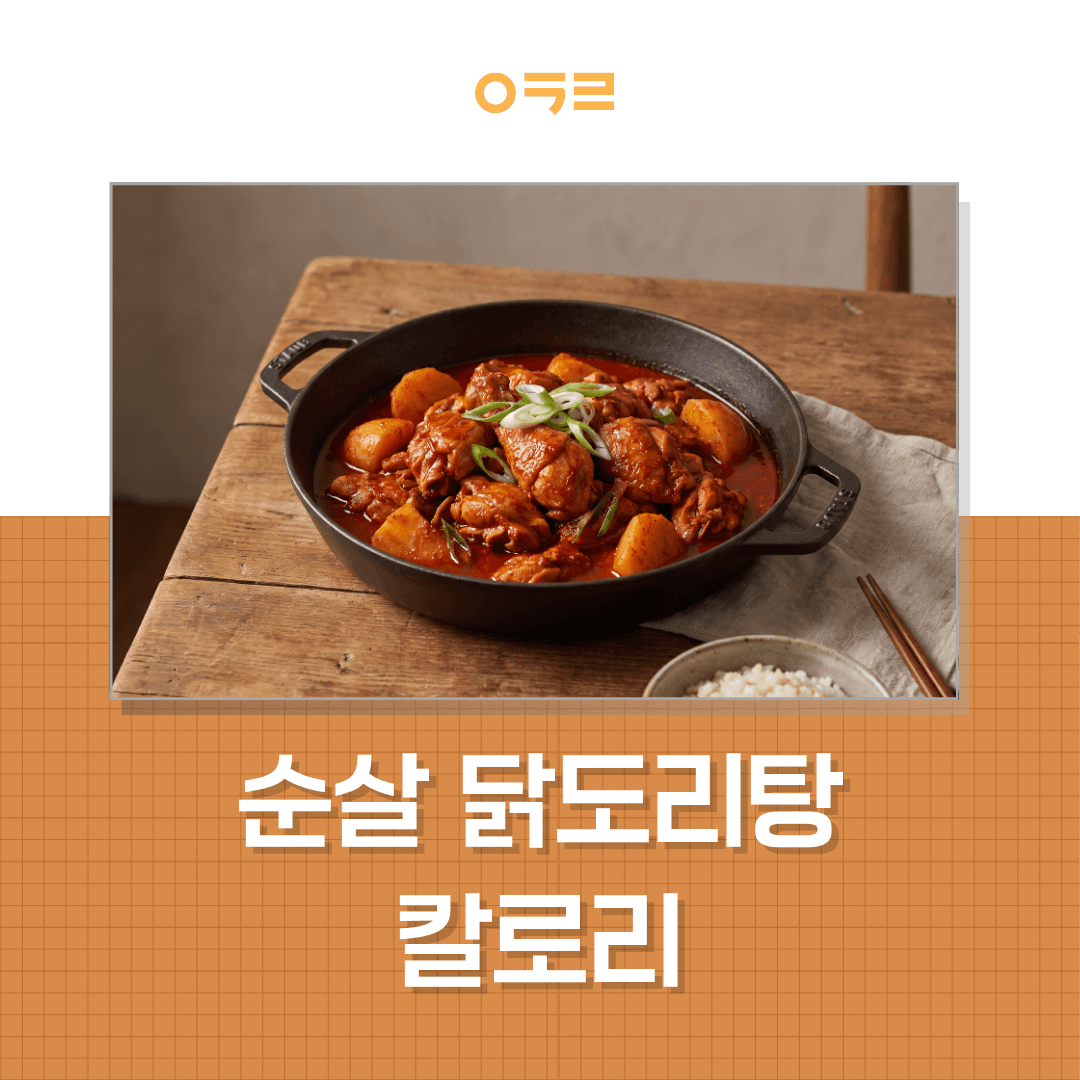
Boneless dakdoritang (Korean spicy braised chicken) is a dish people simmer at home or order as a meal kit. Because there are no bones to pick out, more people now choose boneless versions from the start, and since it is all meat, it is easy to assume the calories must be low too. To give you the bottom line first: with every ingredient added up, one serving of boneless dakdoritang is about 540 kcal, and a meal with a bowl of rice is about 876 kcal, more than double the target for one diet meal.
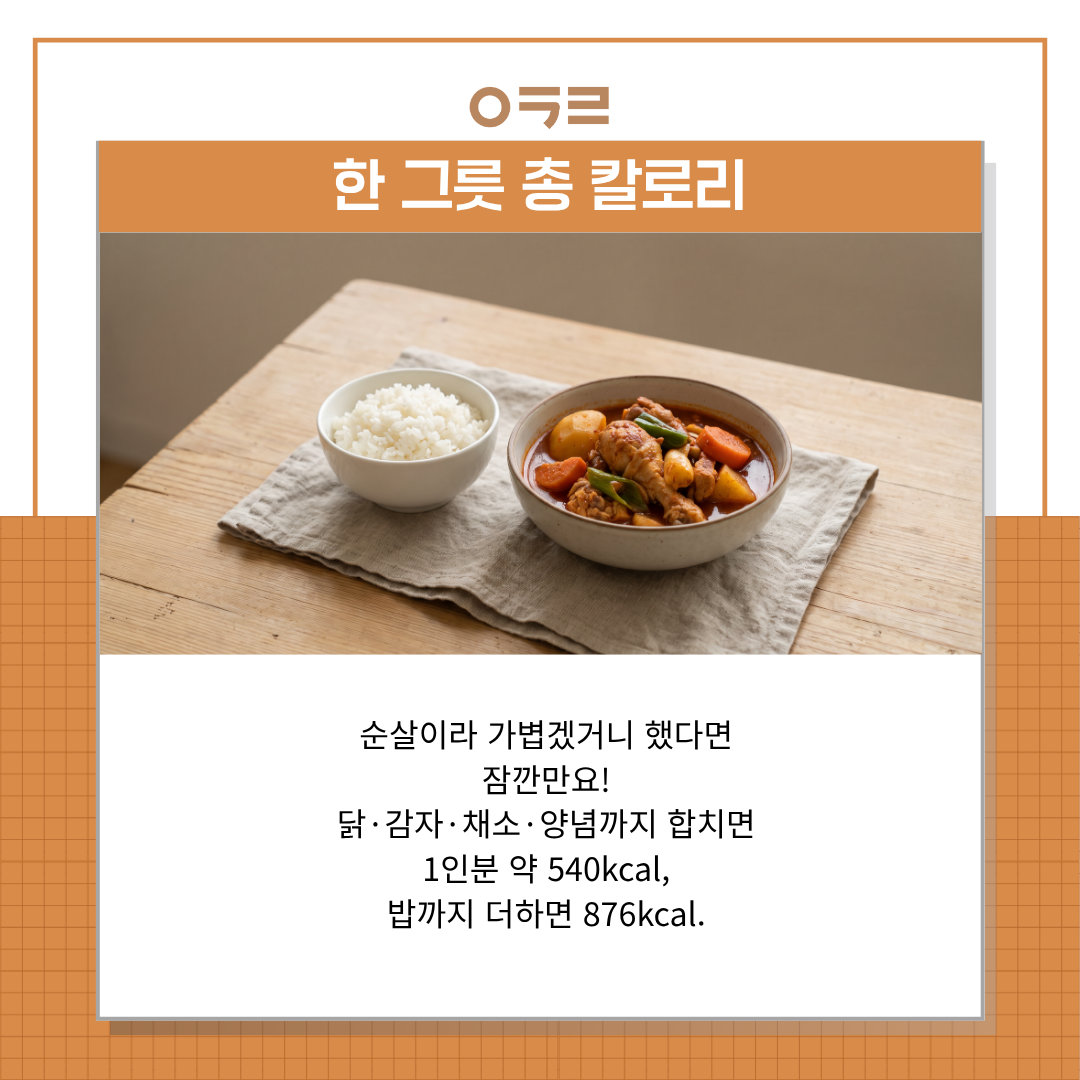
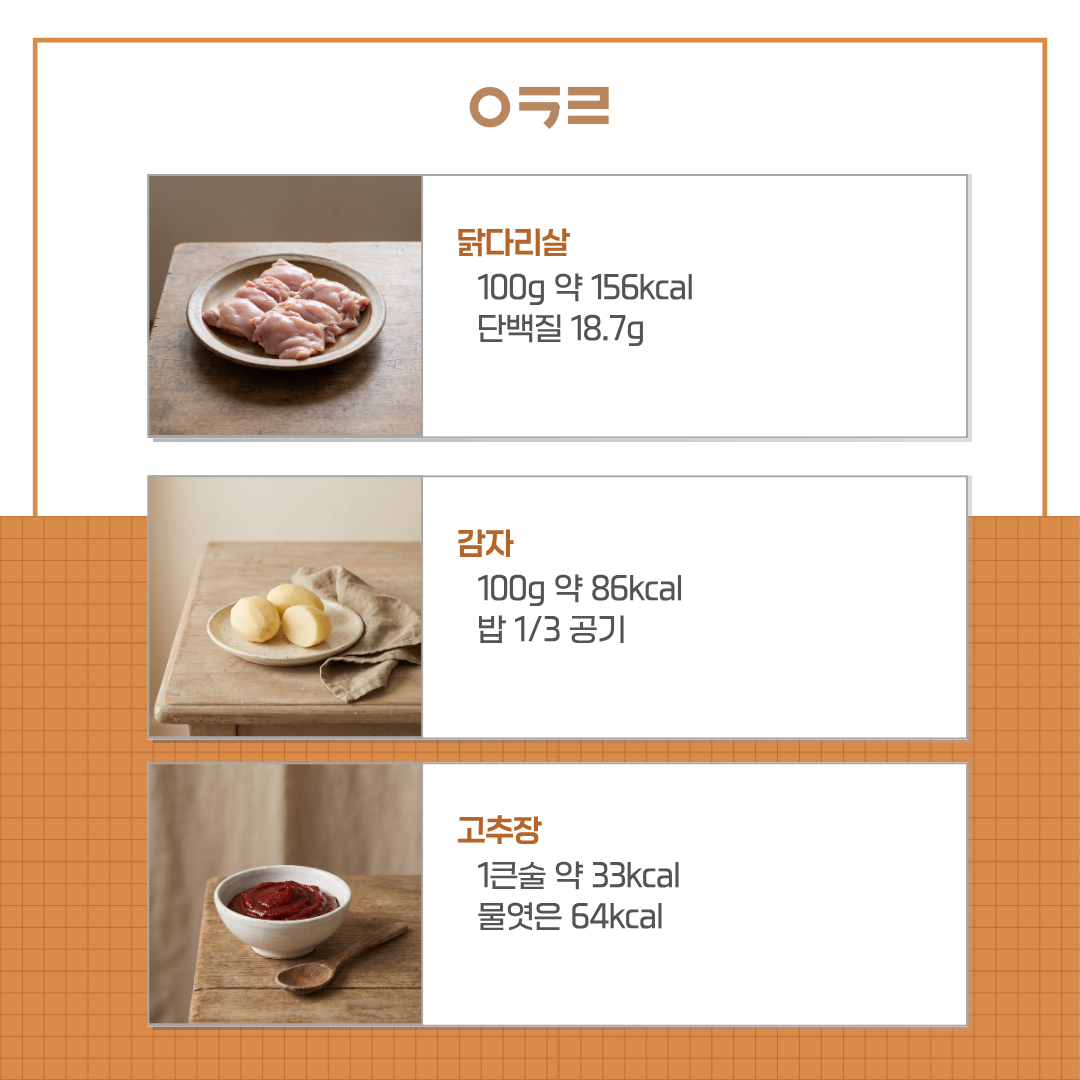
That does not mean you have to give up boneless dakdoritang while dieting. Can you add potato? How many kcal is the seasoning sauce? Are glass noodles okay? For each of these questions, we added up the calories ingredient by ingredient, from the chicken to the sauce, and put together ways to lower the kcal of a meal by changing the combination.
Boneless Dakdoritang Calorie Comparison by Ingredient
Ingredients are listed from the highest calories per reference amount.
| No. | Ingredient | Calories | Reference amount | Protein | Fat |
|---|---|---|---|---|---|
| 1 | Chicken thigh (raw) | About 156 kcal | 100g | 18.7g | 8.78g |
| 2 | Chicken breast (raw) | About 108 kcal | 100g | 22.5g | 1.7g |
| 3 | Potato (boiled) | About 86 kcal | 100g | 1.86g | 0.1g |
| 4 | Corn syrup (mulyeot) | About 64 kcal | 1 tbsp (20g) | 0g | 0g |
| 5 | Onion | About 42 kcal | 100g | 0.92g | 0.08g |
| 6 | Carrot | About 41 kcal | 100g | 0.93g | 0.24g |
| 7 | Gochujang (red pepper paste) | About 33 kcal | 1 tbsp | 0.66g | 0.33g |
| 8 | Gochugaru (red pepper powder) | About 24 kcal | 1 tbsp | 1.2g | 1.7g |
| 9 | Dark soy sauce | About 8 kcal | 1 tbsp | 1.3g | 0g |
※ Ingredient calories are based on values registered on fatsecret and Pillyze.
In boneless dakdoritang, chicken accounts for the largest share of the calories, followed by potato and the seasoning sauce. Vegetables such as onion and carrot are only around 40 kcal even if you add a full 100g, so they are nothing to worry about. The ingredient to watch instead is corn syrup: just 1 tablespoon adds 64 kcal, and combined with gochujang, the seasoning sauce alone comes to nearly 100 kcal.
One Serving of Boneless Dakdoritang: About 540 kcal in Total
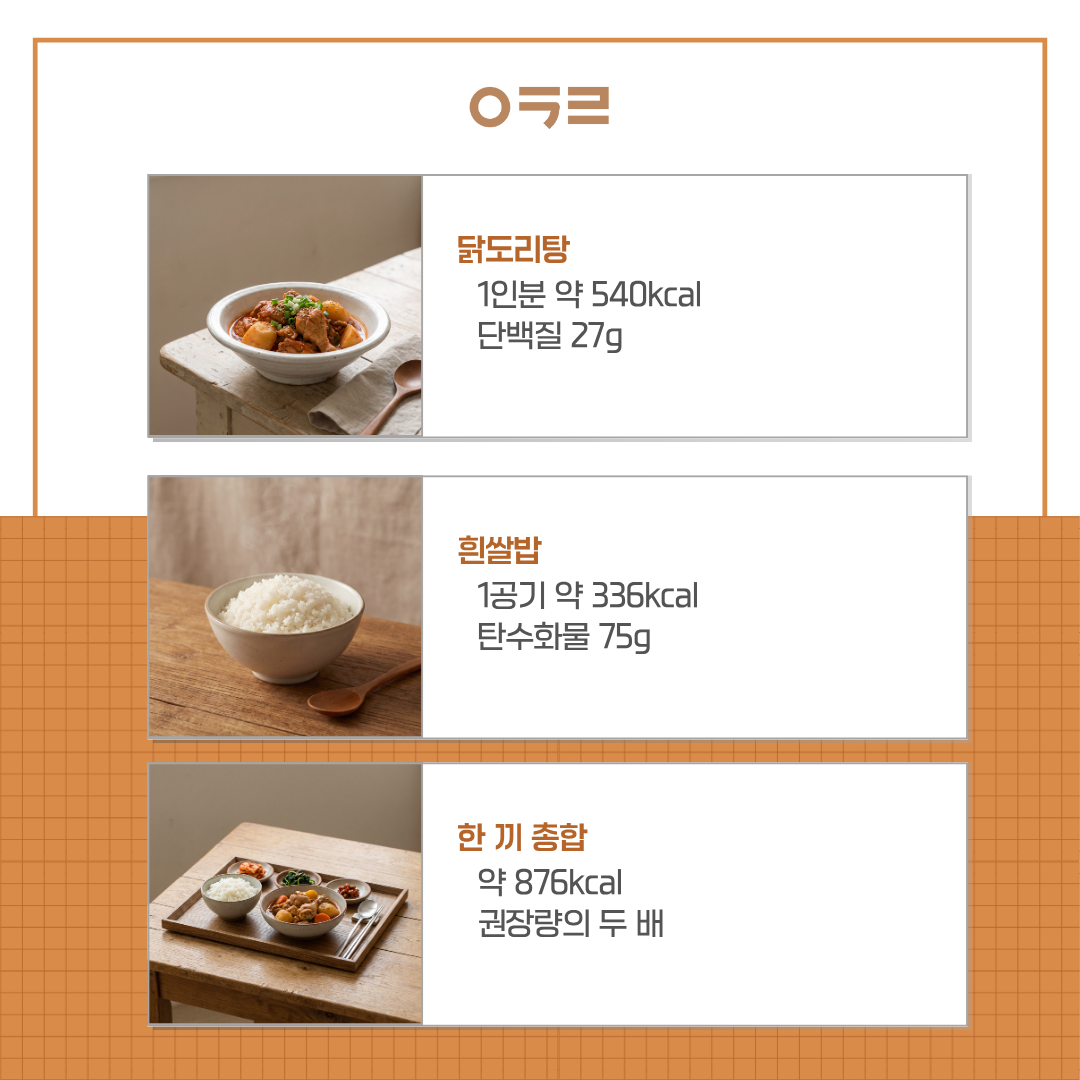
The calculation uses a common two-serving recipe: 400g of boneless chicken, 2 potatoes, 1 onion and a little carrot, seasoned with 2 tbsp gochujang, 2 tbsp gochugaru, 2 tbsp soy sauce and 1 tbsp corn syrup.
| Ingredient | Calories | Amount used |
|---|---|---|
| Boneless chicken thigh | About 624 kcal | 400g |
| Potato | About 172 kcal | 200g (1.5 medium) |
| Onion | About 63 kcal | 150g (1 onion) |
| Carrot | About 29 kcal | 70g |
| Gochujang | About 66 kcal | 2 tbsp |
| Gochugaru | About 48 kcal | 2 tbsp |
| Dark soy sauce | About 16 kcal | 2 tbsp |
| Corn syrup | About 64 kcal | 1 tbsp |
| Total for 2 servings | About 1,082 kcal | |
| 1 serving of boneless dakdoritang | About 540 kcal | |
| 1 bowl of white rice | About 336 kcal | 210g |
| A meal of 1 serving plus 1 bowl of rice | About 876 kcal |
Dividing the two-serving total of about 1,082 kcal in half gives about 540 kcal per serving of boneless dakdoritang. Add 1 bowl of white rice (210g, about 336 kcal), and the meal you actually eat comes to about 876 kcal.
If you set one diet meal at 400 kcal, that is more than double, and it means spending nearly half of a daily 1,200–1,500 kcal on a single meal.
Store-bought products and meal kits use a smaller serving size. For example, labels show about 413 kcal per 300g of boneless dakdoritang, or about 553 kcal per 500g of bone-in dakbokkeumtang. But a bowl cooked at home is usually around 400g, so in terms of what you actually eat, 540 kcal per serving is closer.
Boneless Dakdoritang Calories Compared With Ramyeon and Jjajangmyeon
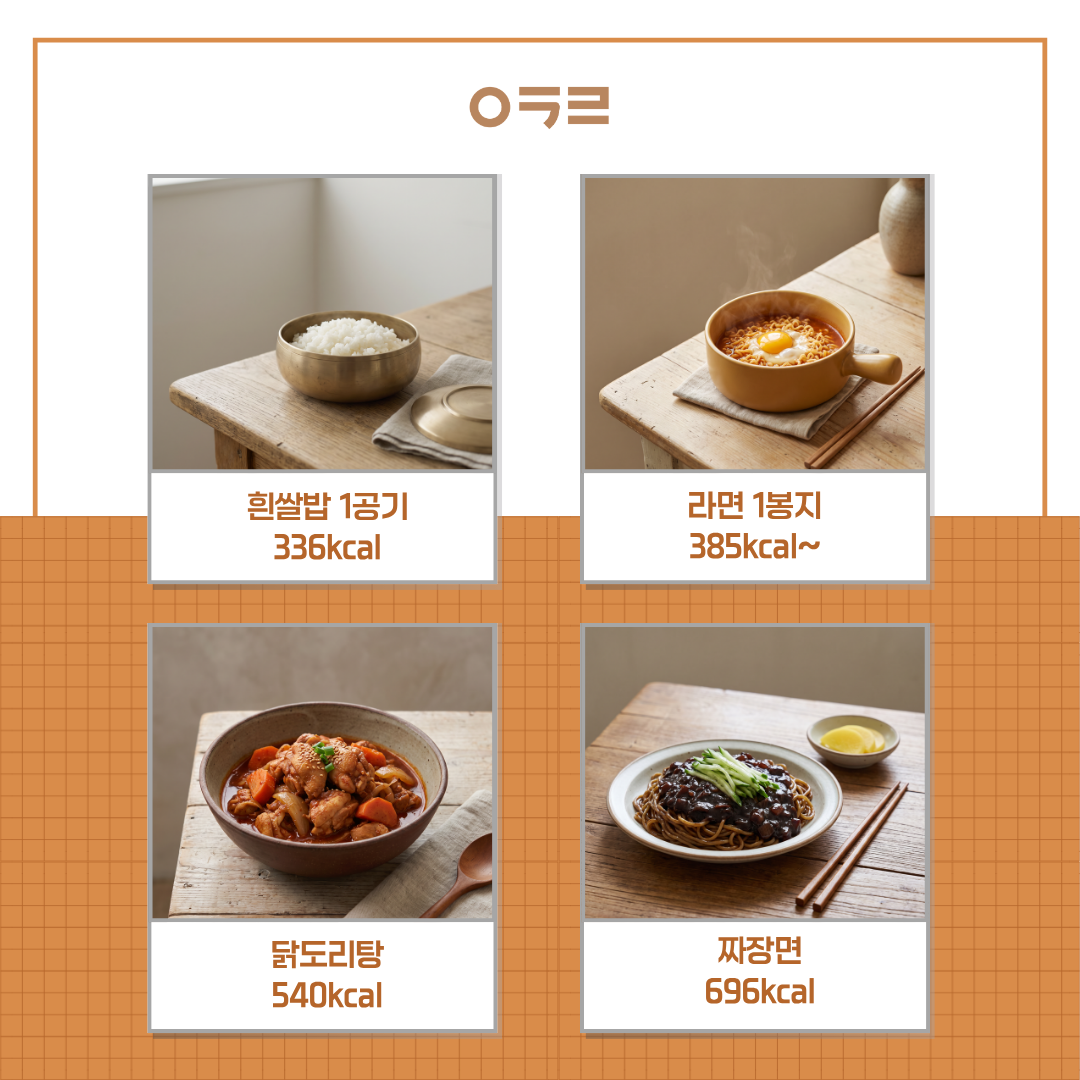
| No. | Calories | Food |
|---|---|---|
| 1 | About 336 kcal | 1 bowl of white rice (210g) |
| 2 | About 385–500 kcal | 1 pack of ramyeon |
| 3 | About 540 kcal | 1 serving of boneless dakdoritang |
| 4 | About 696 kcal | 1 bowl of Chinese-restaurant jjajangmyeon (650g) |
| 5 | About 876 kcal | 1 serving of boneless dakdoritang and 1 bowl of rice |
※ Based on values registered on Pillyze and fatsecret.
At about 540 kcal, one serving of boneless dakdoritang is slightly above one pack of ramyeon. The difference lies in protein. Ramyeon has around 10g of protein, while a bowl of boneless dakdoritang has 50g or more.
Add 1 bowl of rice and the math changes. At about 876 kcal per meal, it is higher than 1 bowl of Chinese-restaurant jjajangmyeon (about 696 kcal).
Diet TIP If you mix rice into the broth, you also eat the oil and sugar left in it. Compared with a day when you eat only the solid ingredients, the gap in one meal's calories is 300 kcal or more.
Chicken Breast vs. Thigh: Choosing Your Boneless Cut
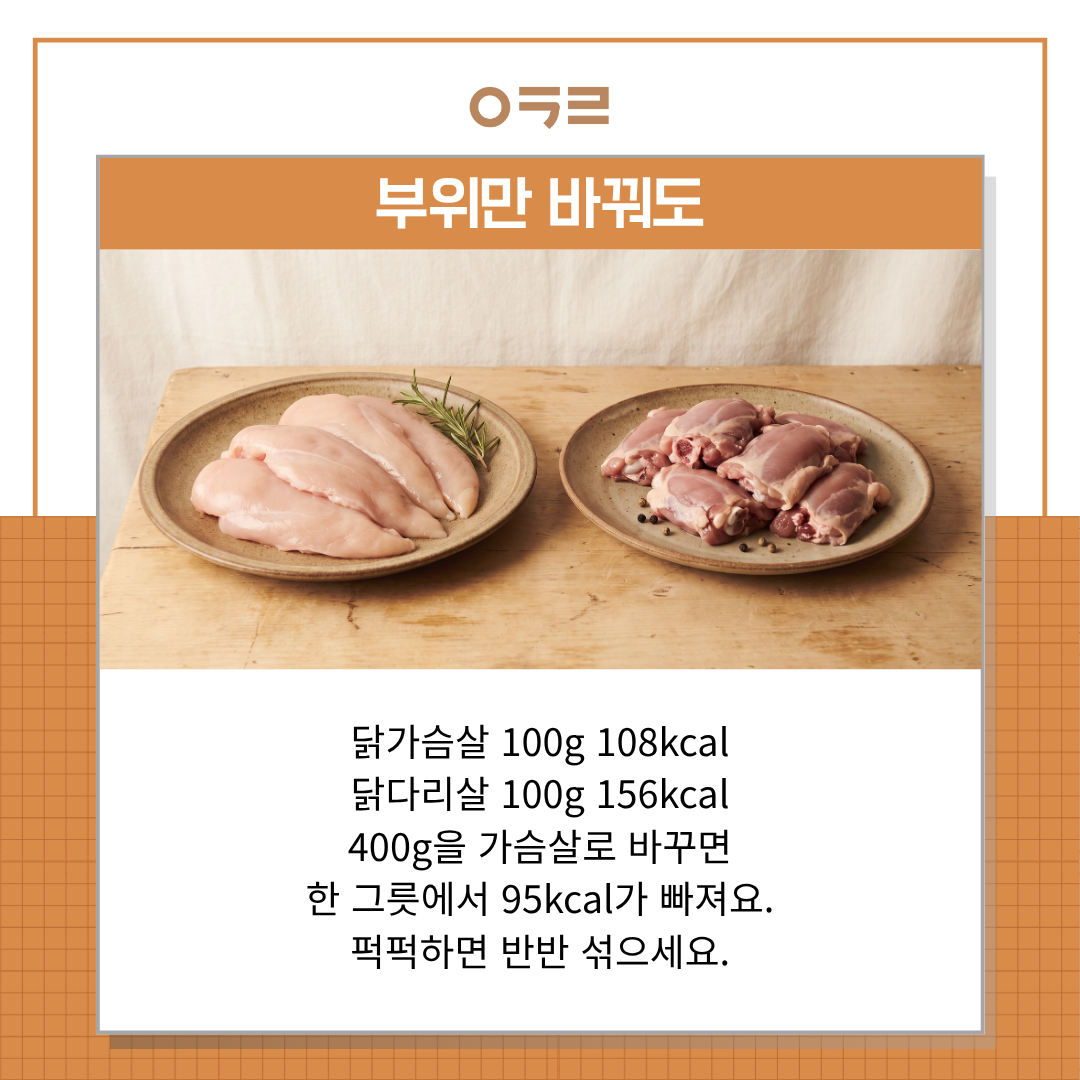
Per 100g, chicken breast is about 108 kcal and thigh about 156 kcal, a 48 kcal difference. If you swap all 400g of boneless meat in the two-serving recipe for breast, the total drops from about 1,082 kcal to about 890 kcal, and one serving of boneless dakdoritang falls to about 445 kcal.
Chicken breast also has more protein, 22.5g per 100g versus 18.7g for thigh. The drawback is that if you use only breast, the texture turns dry during long simmering.
Diet TIP Try mixing breast and thigh half and half. You keep the texture while landing the calories midway between the two cuts.
Potato or Rice: Pick Just One per Meal
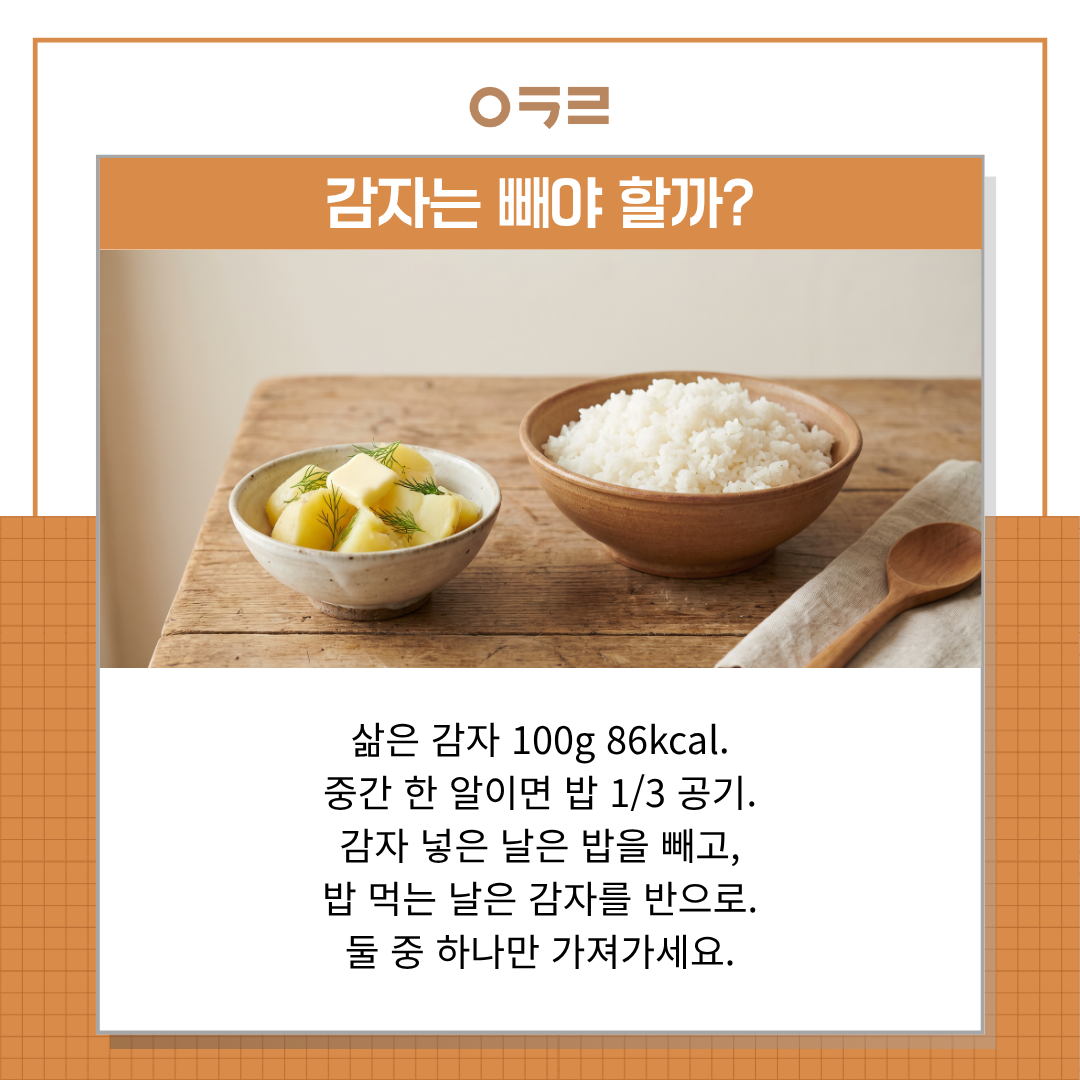
100g of boiled potato is about 86 kcal, so one medium potato has roughly the calories of 1/3 bowl of rice. That is why trading potato for rice is more realistic than always leaving the potato out.
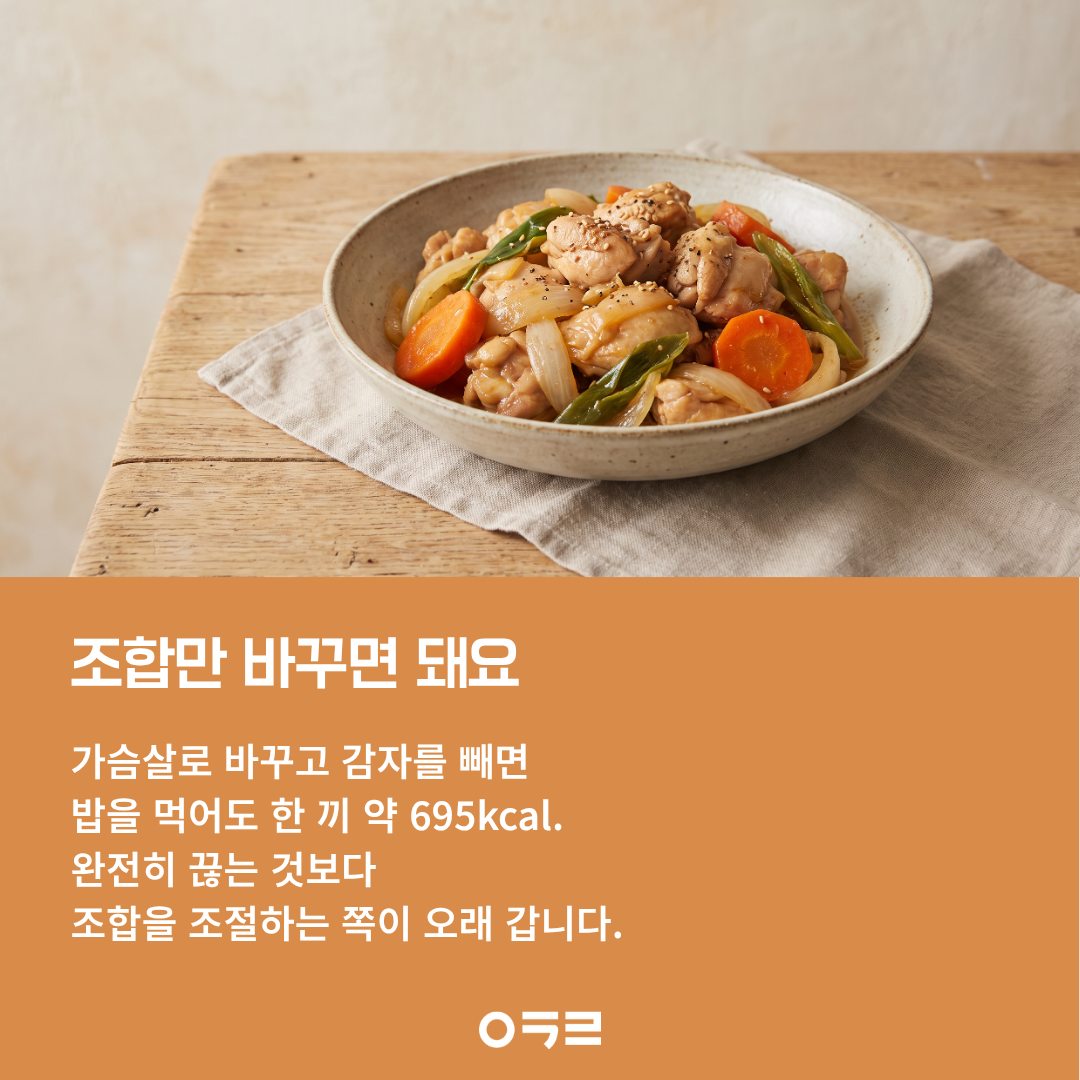
On days you add potato, skip the rice, and on days you eat rice, cut the potato in half. If you take only one of potato or rice, the meal total comes down below 700 kcal. If you switch to chicken breast and also leave out the potato, one serving of boneless dakdoritang is about 359 kcal, and even with a bowl of rice the meal is about 695 kcal.
Sauce Calories: Cut the Corn Syrup First
Based on 2 tbsp gochujang, 2 tbsp gochugaru, 2 tbsp soy sauce and 1 tbsp corn syrup, the boneless dakdoritang sauce is about 194 kcal for two servings, or about 97 kcal per serving. The first ingredient to reduce is corn syrup. 1 tablespoon of corn syrup, about 64 kcal, is equal to 2 tablespoons of gochujang (about 66 kcal).
You can get plenty of heat by using less gochujang and relying on gochugaru and soy sauce. Per tablespoon, gochujang is about 33 kcal, gochugaru about 24 kcal and dark soy sauce about 8 kcal.
Diet TIP Much of the sweetness lost by removing corn syrup can be made up with grated onion.
Konjac Noodles or Tofu Noodles Instead of Glass Noodles
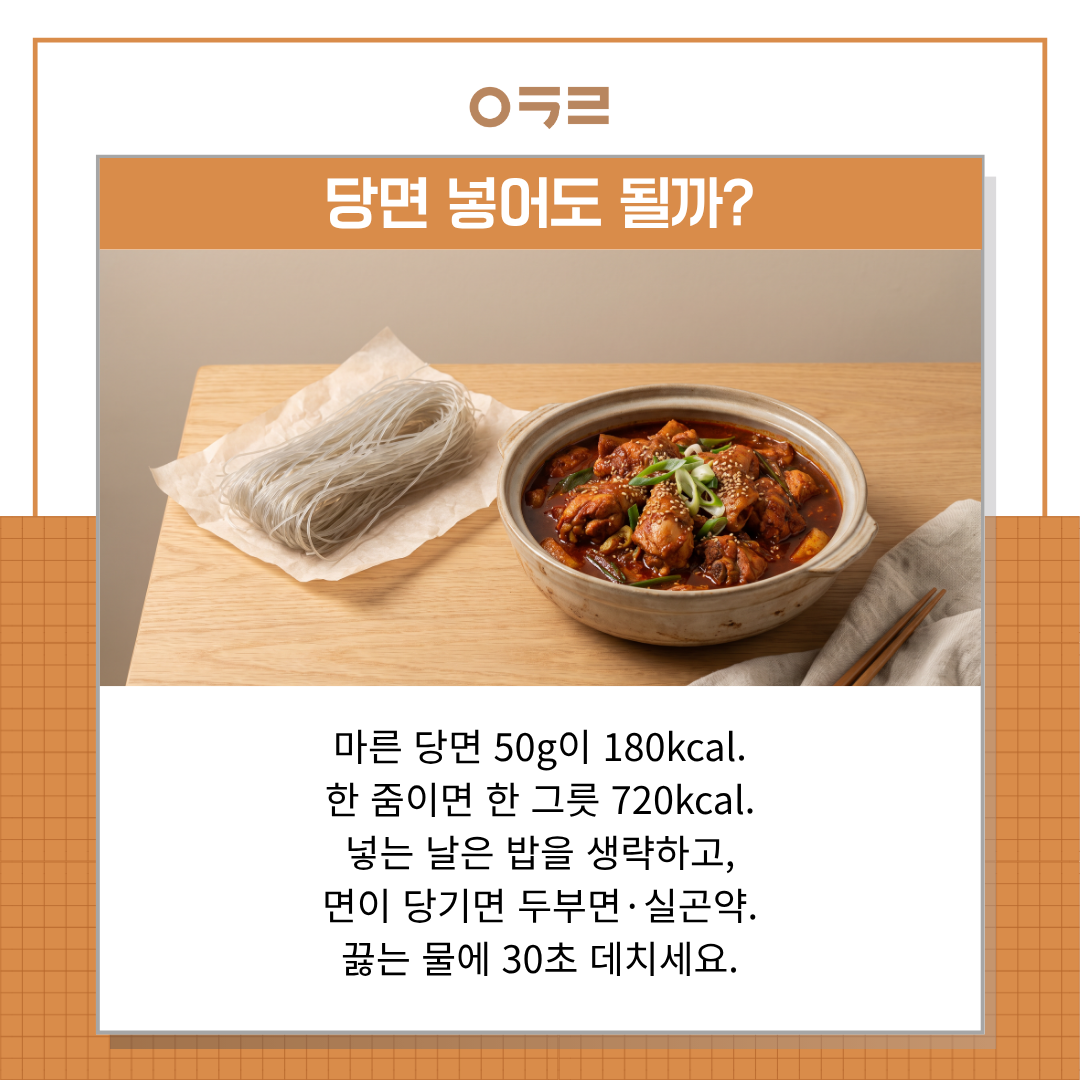
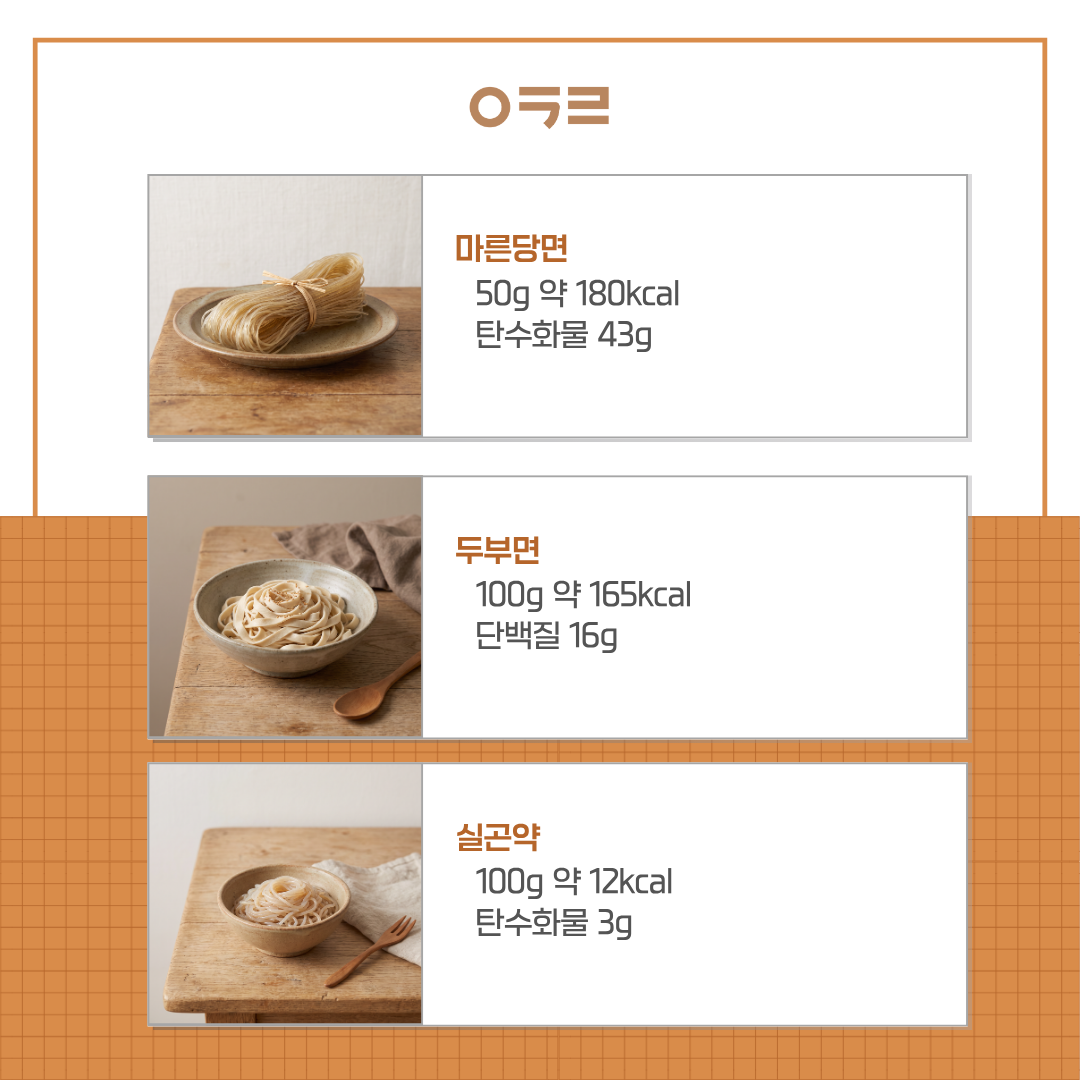
50g of dried glass noodles is about 180 kcal with 43g of carbohydrates. Even one handful raises a bowl of boneless dakdoritang from about 540 kcal to about 720 kcal, and with rice, the meal goes over 1,000 kcal. On days you add glass noodles, you need to leave out the rice for the numbers to work.
| No. | Calories | Noodle type | Reference amount | Carbs | Protein |
|---|---|---|---|---|---|
| 1 | About 12 kcal | Daerimsun thread konjac | 100g | 3g | 0g |
| 2 | About 165–185 kcal | Pulmuone tofu noodles | 100g | 2g | 16g |
| 3 | About 180 kcal | Dried glass noodles | 50g | 43g | 0g |
※ Based on values registered on fatsecret and Pillyze.
If you really crave noodles, switch to thread konjac or tofu noodles. 100g of thread konjac is a light 12 kcal or so, and 100g of tofu noodles is about 165–185 kcal, similar to glass noodles, but with only 2g of carbs and 16g of protein.
Diet TIP Thread konjac has a distinctive smell, so blanch it in boiling water for 30 seconds and rinse before adding. Tofu noodles break easily if simmered long, so add them 2–3 minutes before turning off the heat, just long enough to coat them in the sauce.
Reduce the Broth and Focus on the Solids
The broth of boneless dakdoritang is where the seasoning is most concentrated. Simmer it down until only a little remains, focus on the solid ingredients, and avoid the habit of mixing rice into the broth. Eating it that way pushes the calories even higher than 876 kcal per meal.
If you really want the broth, let it cool slightly after cooking and skim off the oil floating on top. Just removing the oil released from 400g of chicken can save 30–50 kcal.
Good Substitute Ingredients for Boneless Dakdoritang
① No Brand frozen chicken breast, 100g about 108 kcal — Even cooked in the same sauce, it has 48 kcal less per 100g than thigh, and actually more protein at 22.5g.
② Daerimsun thread konjac, 100g about 12 kcal — Use it in place of glass noodles. It has a satisfying chew, so it works well when you crave noodles.
③ Pulmuone tofu noodles, 100g about 165–185 kcal — The calories are similar to glass noodles, but with 2g of carbs and 16g of protein, they are a good choice on days you want to finish with one bowl and no rice.
※ Based on values registered on fatsecret and Pillyze.
Frequently Asked Questions
Q. How many calories are in one serving of boneless dakdoritang? A. Adding up the chicken, potato, vegetables and sauce, it is about 540 kcal. The whole two-serving recipe is about 1,082 kcal.
Q. How many calories is a meal if I also eat a bowl of rice? A. Adding 1 bowl of white rice, about 336 kcal, makes about 876 kcal, which is higher than a bowl of jjajangmyeon (about 696 kcal).
Q. How many calories are in the sauce alone? A. About 97 kcal per serving, or about 194 kcal for two servings.
Q. How much do the calories drop if I switch to chicken breast? A. One serving drops from about 540 kcal to about 445 kcal, and if you also leave out the potato, a meal is about 695 kcal even with a bowl of rice.
Q. Is it okay to add glass noodles? A. 50g of dried glass noodles is about 180 kcal, so skip the rice on days you add them. If you need noodles, thread konjac or tofu noodles are alternatives.
Summary
With all ingredients added up, one serving of boneless dakdoritang is about 540 kcal, and a meal with a bowl of rice is about 876 kcal. Within one serving, chicken thigh is the largest part at about 312 kcal, followed by the sauce at about 97 kcal and potato at about 86 kcal. If you are dieting, use 400 kcal per meal and 1,200–1,500 kcal per day as your guide, and try this combination: switch the cut to chicken breast, pick only one of potato or rice, and take the corn syrup out of the sauce. Adjusting the combination lasts longer than cutting out a food you love. With those changes, boneless dakdoritang can fit well within your diet meal plan.
KakaoTalk consultation: search “acrohani” / Website: https://acrohani.com/en / 480 Gangnam-daero, 2F, Sinnonhyeon Station Exit 3, 1-minute walk
Reviewed by: Dr. Lim Ju-hyeok, Medical Director · Medical Director, ACRO Korean Medicine Clinic · Last reviewed 2026-10-11
This article is intended to provide general information, and results may differ depending on each person’s eating habits and constitution. Please confirm the right approach to diet and weight management through a consultation with a professional.