


Late Period While Dieting: How Long Can You Wait? Why It Happens and When to See a Doctor
How much undereating has an effect, what about exercise, and when your period comes back

Hello, this is Dr. Park Ji-seon of ACRO Korean Medicine Clinic.
In weight-loss consultations, I often hear, “Since I started my diet, my period is two weeks late.”
You don’t think you’re pregnant, but you keep counting the days on the calendar again and again,
and when you type “late period while dieting” into a search bar, the worrying posts are the first to catch your eye.
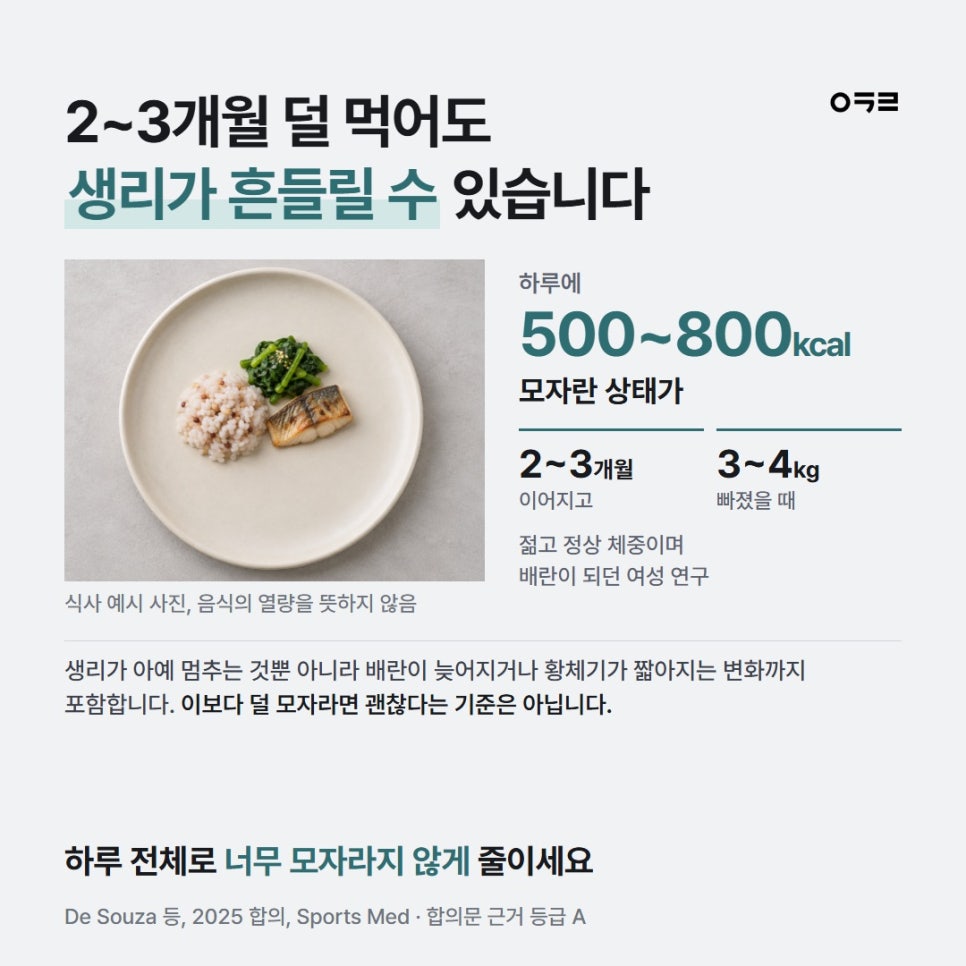
The latest 2025 consensus statement concluded that even in healthy young women, a shortfall of 500–800 kcal a day for 2–3 months
with a loss of 3–4 kg can lead to changes in the menstrual cycle.
Fortunately, changes that arise this way can improve when you restore how much you eat.
However, if periods that used to be regular have been absent for more than 3 months, it’s time to have the cause checked.
So today, focusing on guidelines, consensus statements, meta-analyses and randomized studies published since 2021,
I’d like to go over why dieting can delay your period, what about exercise, and when you should see a doctor.
| At a Glance 1. When you eat far less than the energy you use, the brain signals that control ovulation are disrupted 2. Menstrual changes can occur even with a shortfall of 500–800 kcal a day for 2–3 months and a loss of 3–4 kg 3. In large studies, there was no clear link between everyday exercise and irregular periods 4. If periods that used to be regular have been absent for more than 3 months, the cause should be checked 5. In exercising women whose periods had become infrequent or stopped due to energy deficiency, eating 300–600 kcal more a day could start recovery, and you need to see whether cycles continue several times in a row |
|---|
What to Check First If Your Period Is Late
Even if you’re dieting, when your period is late, the first step is to rule out pregnancy.
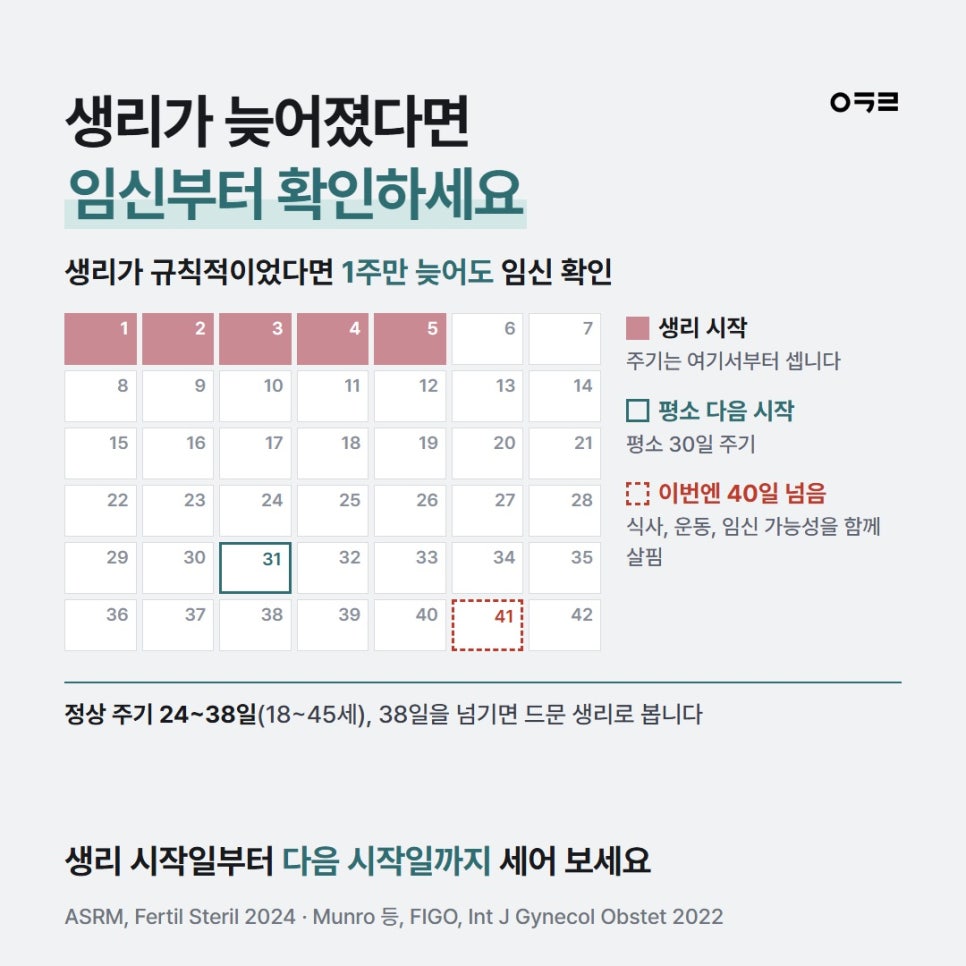
In 2024, the American Society for Reproductive Medicine (ASRM) said that for women with regular periods, a pregnancy test may be needed when a period is just 1 week late.
The next step is to look at what your usual cycle was like.
A 2022 consensus from the International Federation of Gynecology and Obstetrics (FIGO) considers a normal cycle for women aged 18–45 to be 24–38 days,
and classifies cycles longer than 38 days as infrequent menstruation.
Cycle length is the number of days from the first day of one period to the first day of the next.
So if your cycle was usually 30 days and goes beyond 40 days after you start dieting, it’s a good idea to look at changes in your diet and exercise along with the possibility of pregnancy.
Why Does Dieting Delay Your Period?
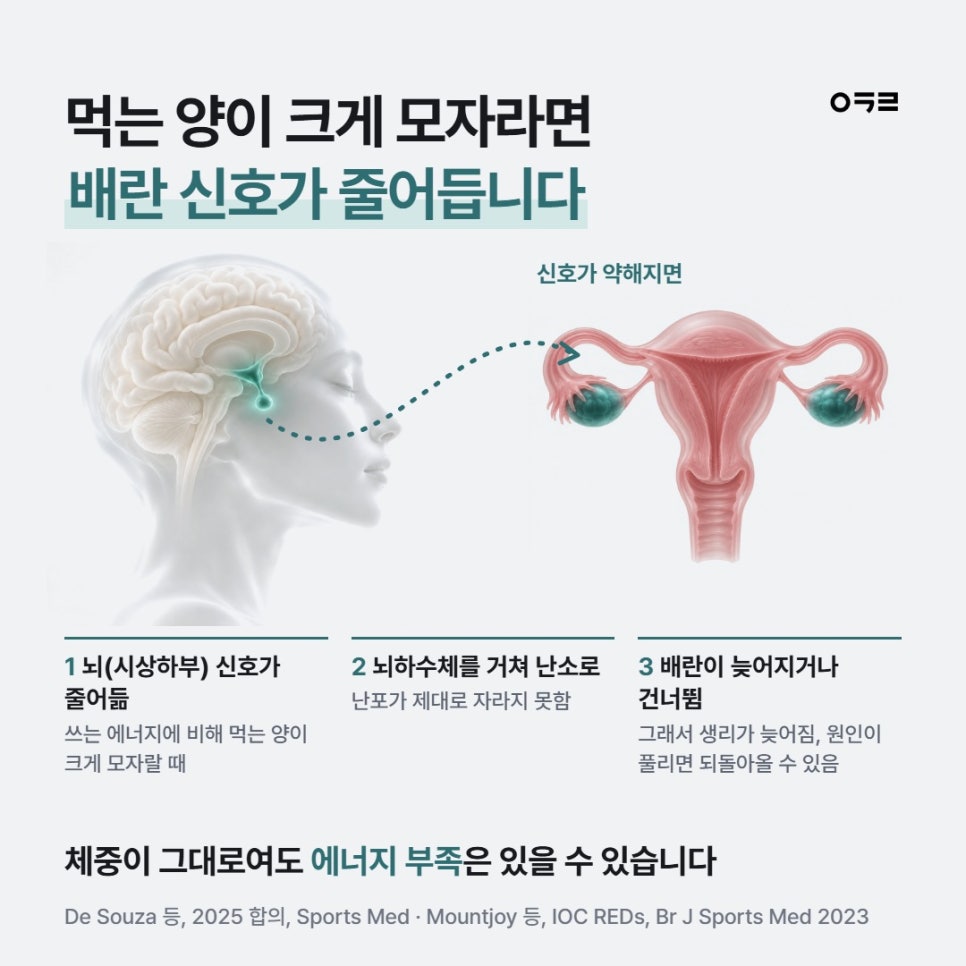
The menstrual cycle is regulated by hormones exchanged between the brain and the ovaries.
The hypothalamus sends signals at a steady rhythm, and these signals must reach the ovaries by way of the pituitary gland for follicles to grow and ovulation to happen.
When you eat far less than the energy you use, these signals weaken, and ovulation is delayed or skipped.
In effect, the body directs its energy first to getting by right now rather than to preparing for pregnancy.
The latest consensus statement, released in 2025 by the Female Athlete Triad Coalition,
calls this starting point “energy deficiency,”
and states that stable body weight does not mean there is no energy deficiency.
The 2023 International Olympic Committee (IOC) consensus statement likewise identified eating too little relative to the energy spent on exercise as the same underlying cause.
Because these consensus statements were built mainly around athletes, it’s hard to apply their numbers as they are,
but the same principle applies to people who tighten their diet while increasing exercise.
When periods stop because brain signals are suppressed by something like energy deficiency, after other causes have been ruled out, this is called functional hypothalamic amenorrhea.
Rather than a disease of the ovaries or uterus, it is a state in which the brain has turned down its signals, so periods can return once the cause is resolved.
How Much Undereating Affects Your Period?
It’s hard to draw one line, the same for everyone, for how many calories short will delay a period.
The 2025 consensus statement also concluded that the energy thresholds used in the past should not be applied identically to everyone,
and that each person should be assessed differently.
Instead, there is a statement the consensus gave its highest evidence grade (A).
Even young, normal-weight women who had been ovulating saw menstrual changes when they ran a shortfall of 500–800 kcal a day for 2–3 months and lost 3–4 kg.
What increased includes changes such as delayed ovulation or a shorter luteal phase after ovulation,
so it is not a figure that counts only periods stopping altogether.
| Conditions seen in the research | What these numbers cannot tell us |
|---|---|
| A shortfall of 500–800 kcal a day for 2–3 months | A threshold below which a smaller shortfall is fine |
| A weight loss of 3–4 kg | A line for how many kilograms of loss will stop periods |
| Healthy young women | The same result for everyone |
What patients find most surprising here
is that periods can be disrupted even without a large weight loss of several kilograms a month.
So don’t look only at the number on the scale; also consider how large your daily shortfall has been and for how many months it has continued.
Does Hard Exercise Delay Your Period?
Many people wonder whether exercise itself delays periods.
A 2025 meta-analysis published in the Journal of Women's Health
pooled 82 observational studies with 101,413 women to examine the relationship between exercise and menstruation.
In the 11 studies pooled separately for menstrual irregularity,
no statistically clear difference was found between women who did little or no exercise and those who exercised at a moderate level or more.
The relationship with cycle length or period duration also varied from study to study,
and most were one-time surveys, so the quality of evidence was not high.
An Australian study published in Human Reproduction in 2021
followed 10,618 women who were aged 22–27 in 2000 through 2015,
and found no clear association between activity level and irregular periods.
Rather, women with obesity showed a clearer association with irregular periods than underweight or normal-weight women did (odds ratio 1.29).
The 2025 consensus statement placed energy deficiency at the center of what disrupts periods,
and found insufficient evidence that exercise stress alone stops periods when energy is adequate.
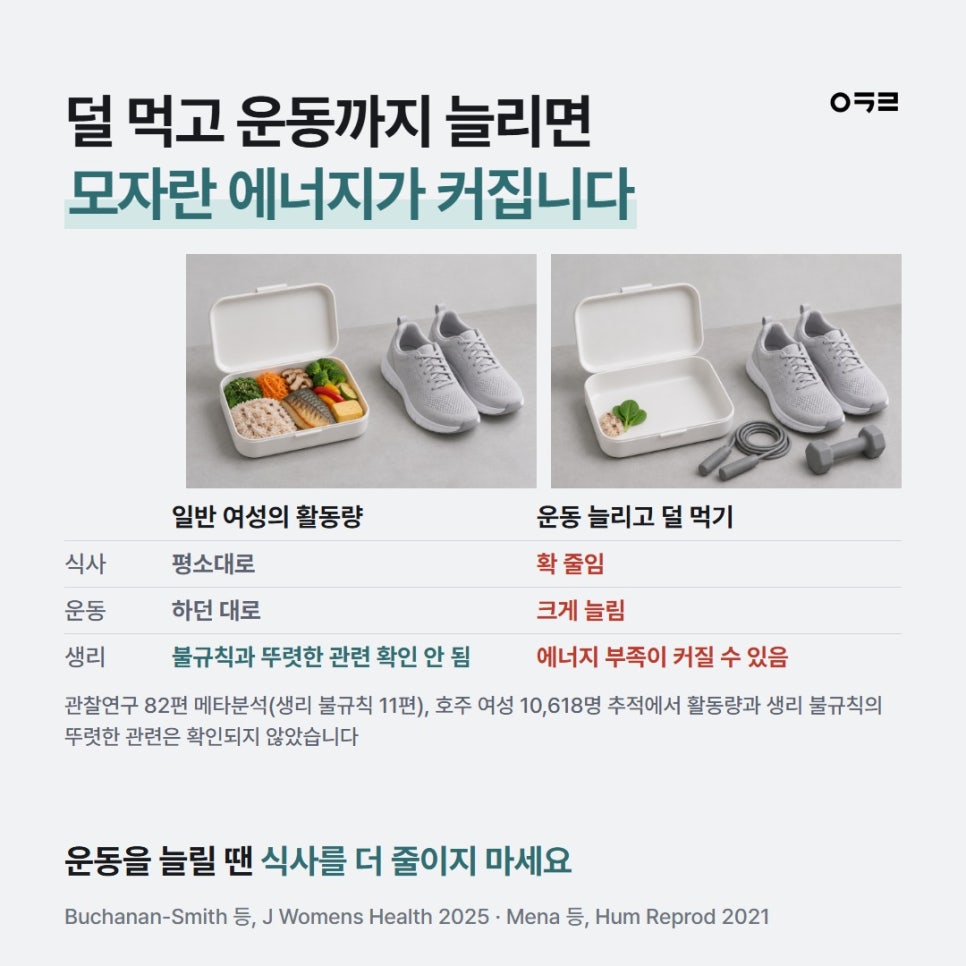
Even so, it would be a stretch to read this as meaning any amount of exercise is fine.
| Situation | Relationship with periods |
|---|---|
| Activity levels of women in general | No clear association found in large studies |
| Cutting food while greatly increasing exercise | The energy shortfall grows, which can disrupt periods |
So if you’ve increased exercise while also eating less, it’s a good idea to check whether your energy shortfall has grown.
How Late Should Your Period Be Before You See a Doctor?
If your period is late while dieting, first check your usual cycle and the possibility of pregnancy,
and the longer the delay goes on, the more you need to look at causes other than energy deficiency too.
The 2024 American Society for Reproductive Medicine guidance on evaluating amenorrhea
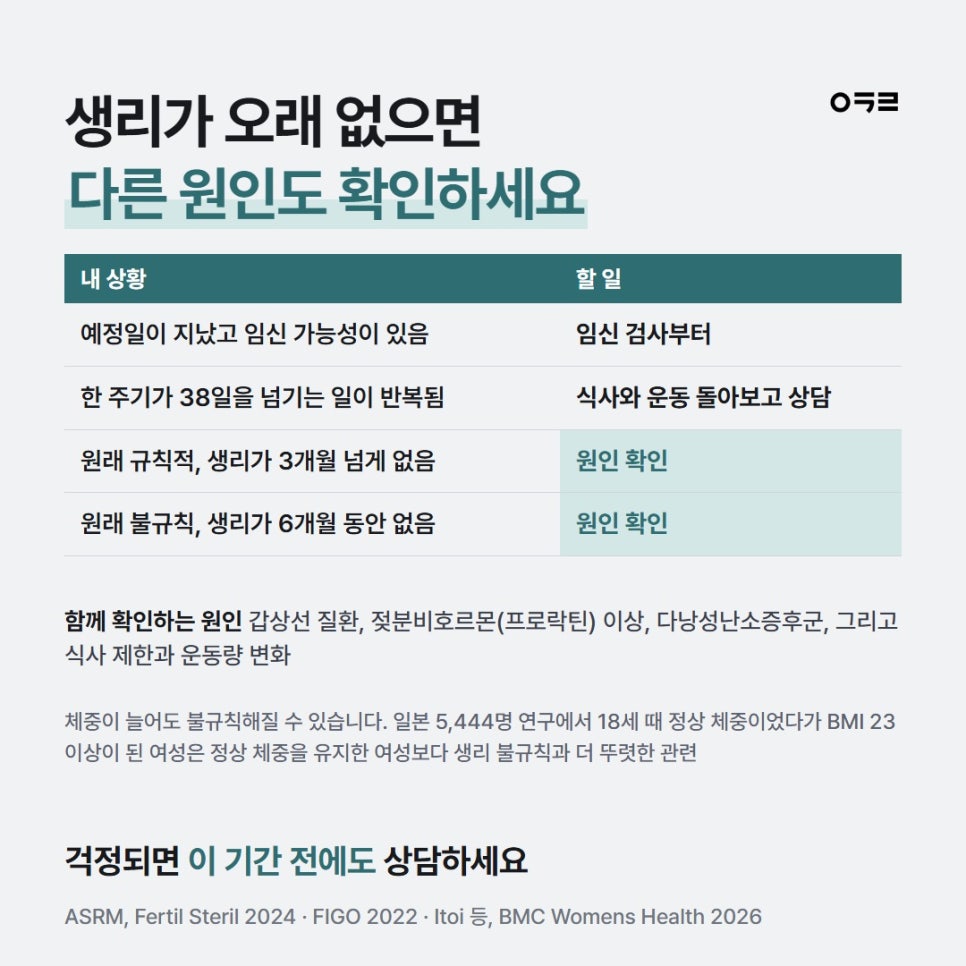
recommends checking for the cause if periods that used to be regular have been absent for more than 3 months, or periods that were already irregular have been absent for 6 months.
You don’t necessarily have to wait that long; if you’re worried, you can seek a consultation sooner.
| When | What to do |
|---|---|
| Your expected date has passed and pregnancy is possible | Take a pregnancy test first |
| Cycles longer than 38 days keep recurring | Review diet and exercise, and seek a consultation |
| Previously regular periods have been absent for more than 3 months | Have the cause checked |
| Previously irregular periods have been absent for 6 months | Have the cause checked |
When checking for the cause, other causes such as thyroid disease, abnormal prolactin (the milk-stimulating hormone) levels and polycystic ovary syndrome are examined,
along with dietary restriction and changes in the amount of exercise.
It’s important not to jump to conclusions about the cause just because you were trying to lose weight.
If your periods became irregular as you gained weight, polycystic ovary syndrome should also be considered.
Please see our blog post on this.
▶ I Have Polycystic Ovary Syndrome (PCOS). Can I Take Herbal Diet Medicine?
https://blog.naver.com/acrohani01/222686190107
Will Your Period Come Back If You Eat More Again?
A period delayed by energy deficiency can improve when you restore how much you eat.
The amount needed differs from person to person, but the increase used in research was not as large as you might think.
Part 1 of the 2025 consensus statement concluded, with evidence grade A, that in exercising women
whose periods had become infrequent or stopped due to energy deficiency, eating 300–600 kcal more a day can start recovery.
One of the randomized studies behind this figure is the REFUEL study, published in Human Reproduction in 2021.
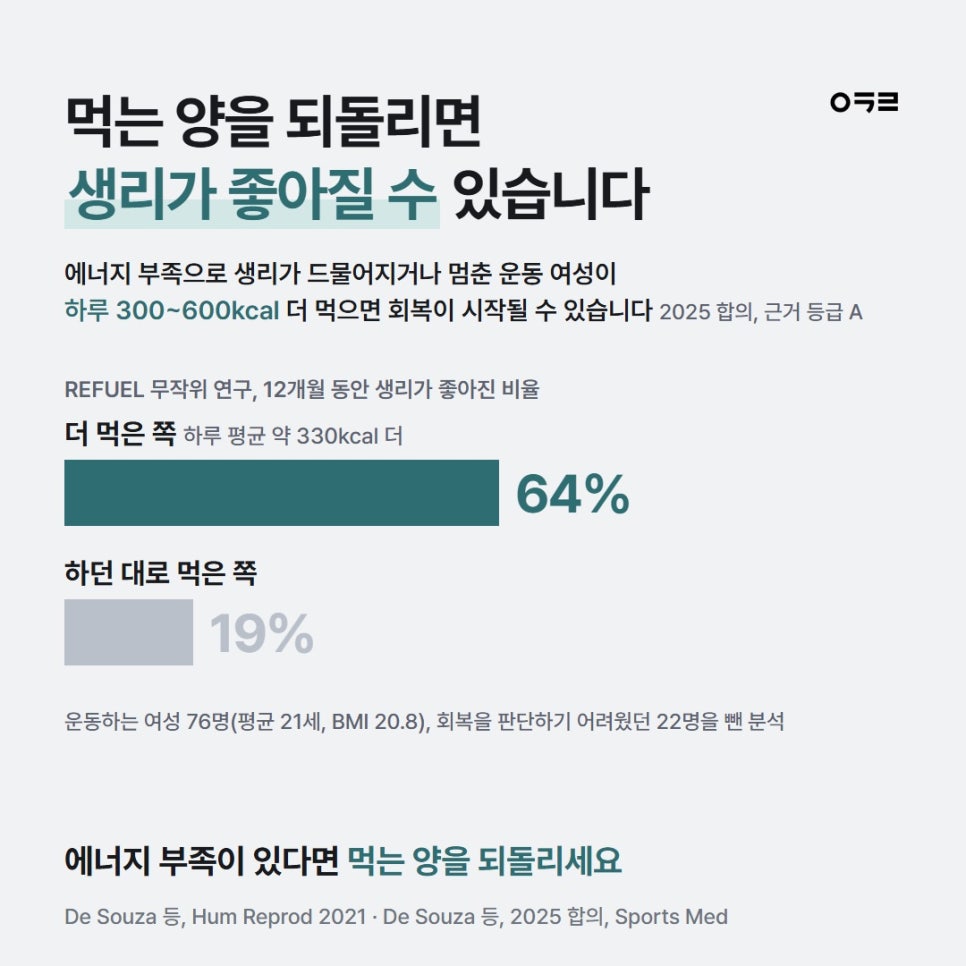
It divided 76 exercising women with irregular or absent periods (average age 21, BMI 20.8)
into one group that ate more than usual for 12 months and another that kept eating as before.
The group assigned to eat more actually added an average of about 330 kcal a day,
and periods also returned in more of them than in the group that ate as before (hazard ratio, HR 1.91).
In an analysis excluding 22 women whose recovery was hard to judge, periods improved in 64% of the group that ate more and 19% of the group that ate as before.
| Ate more | Ate as before | |
|---|---|---|
| Extra intake per day | About 330 kcal on average | Assigned to maintain their previous intake |
| Share whose periods improved (analysis excluding 22 women) | 64% | 19% |
However, one period returning does not mean full recovery.
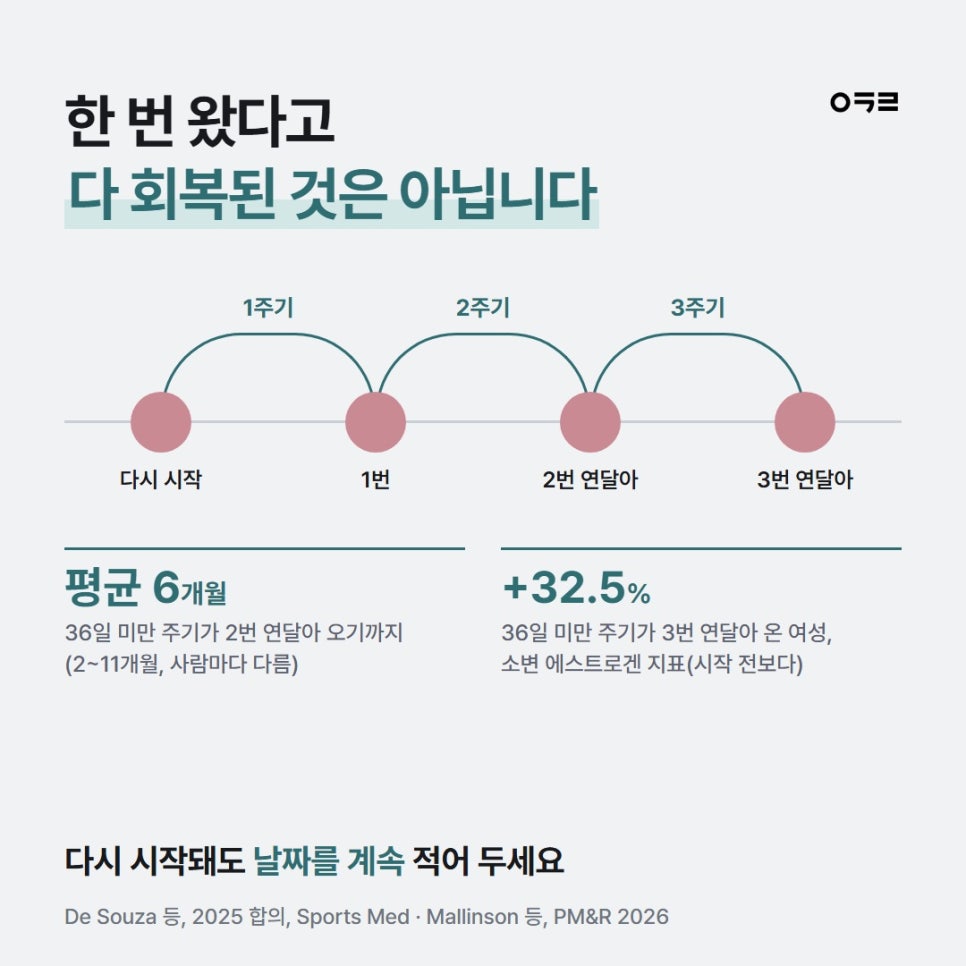
According to the consensus statement’s summary of follow-up analyses from the same study, it took an average of 6 months (2–11 months) to have two consecutive cycles shorter than 36 days,
and in a follow-up analysis published in 2025, women who had three consecutive cycles shorter than 36 days
showed a 32.5% increase from baseline in a urinary marker of estrogen.
So even after your period restarts, it’s a good idea to keep noting the dates for a few cycles
and see whether your cycle settles into a steady pattern.
Weight going up and down around your period is another matter.
For how many kilograms of gain before a period is okay, please see our blog post.
▶ Weight Gain Before Your Period: How Many Kilograms Is Okay?
https://blog.naver.com/acrohani01/224468295301
Does a Long Absence of Periods Also Affect Your Bones?
A period being a few weeks late is not, by itself, taken to mean that bone density has dropped.
If periods have stopped for a long time, weight has dropped considerably or you have had a fracture, bone health is also checked.
A 2025 consensus statement for athletes listed going without a period for more than 90 days as a high-risk factor when deciding on bone density testing.
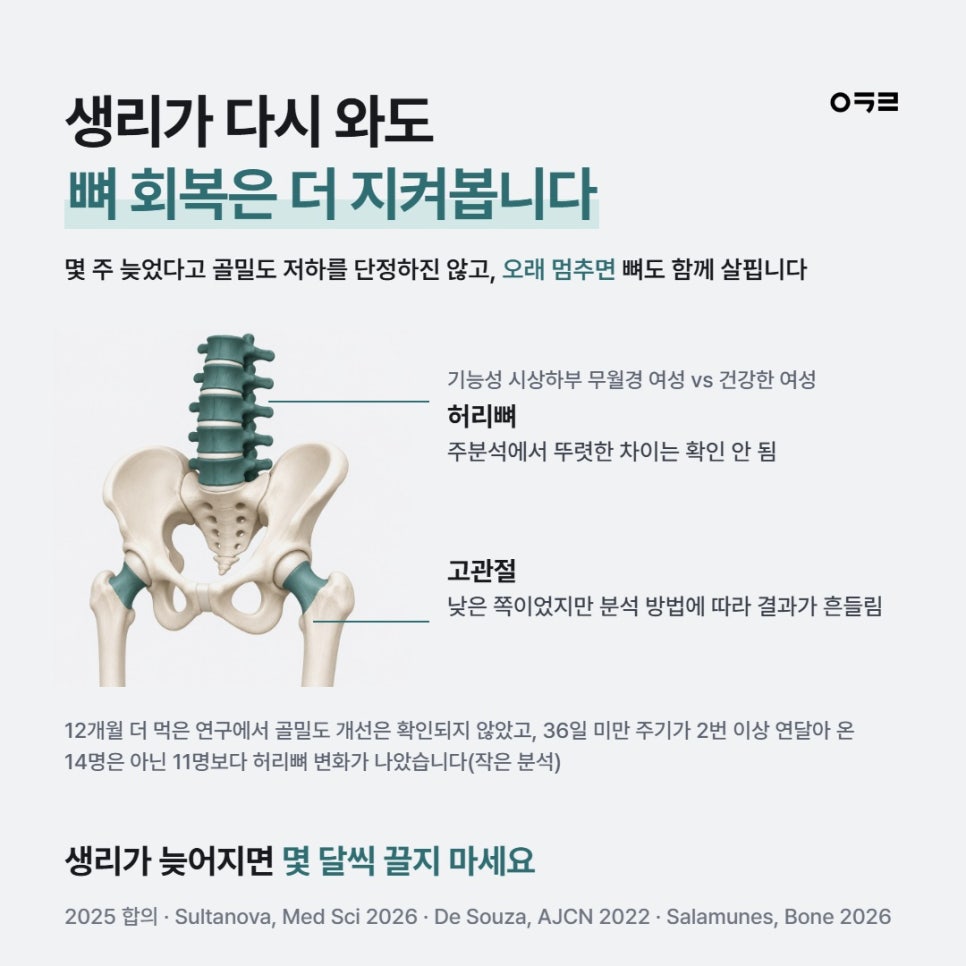
A 2026 meta-analysis in Medical Sciences compared bone density between women with functional hypothalamic amenorrhea or anorexia and healthy women.
Women with functional hypothalamic amenorrhea tended to have lower hip bone density,
but the result shifted depending on the analysis method, and for the lumbar spine the main analysis found no clear difference.
Whether bones also recover once you eat more again still needs more research.
In the REFUEL study, the group that ate more for 12 months had better menstrual outcomes, but the results did not show a greater improvement in bone density than in the group that ate as before (2022),
and the 2025 consensus statement also said it is still unclear whether eating more alone restores bone density.
However, among the women who ate more, the 14 who had two or more consecutive cycles shorter than 36 days
tended to show better lumbar spine bone density than the 11 who did not (Bone, 2026).
Because this was a small analysis grouped by whether recovery occurred, it’s hard to conclude that the return of periods was the reason, but it is a result worth noting.
So when your period is late, check for pregnancy and other causes,
and if there is an energy deficiency, adjusting food and exercise before it drags on for months is also better for your bones.
Protecting Your Period While Dieting
Here is how the studies above translate into everyday habits while dieting.
1. Don’t make your daily shortfall too large
The consensus statement concluded that menstrual changes occurred with a shortfall of 500–800 kcal a day for 2–3 months.
When cutting back on food, it’s a good idea to check that your intake over the whole day isn’t falling too far short of your activity level.
2. Don’t start dieting and exercise all at once in a big push
No clear association was found between the activity levels of women in general and irregular periods,
but if you increase exercise while eating less, your energy shortfall grows all at once.
It’s a good idea to pace yourself so you don’t make big changes to both at the same time.
3. Record your weight and period dates together
Energy deficiency can exist even without a large weight loss.
If your cycle is getting longer even though your weight has changed little, review both your food and exercise.
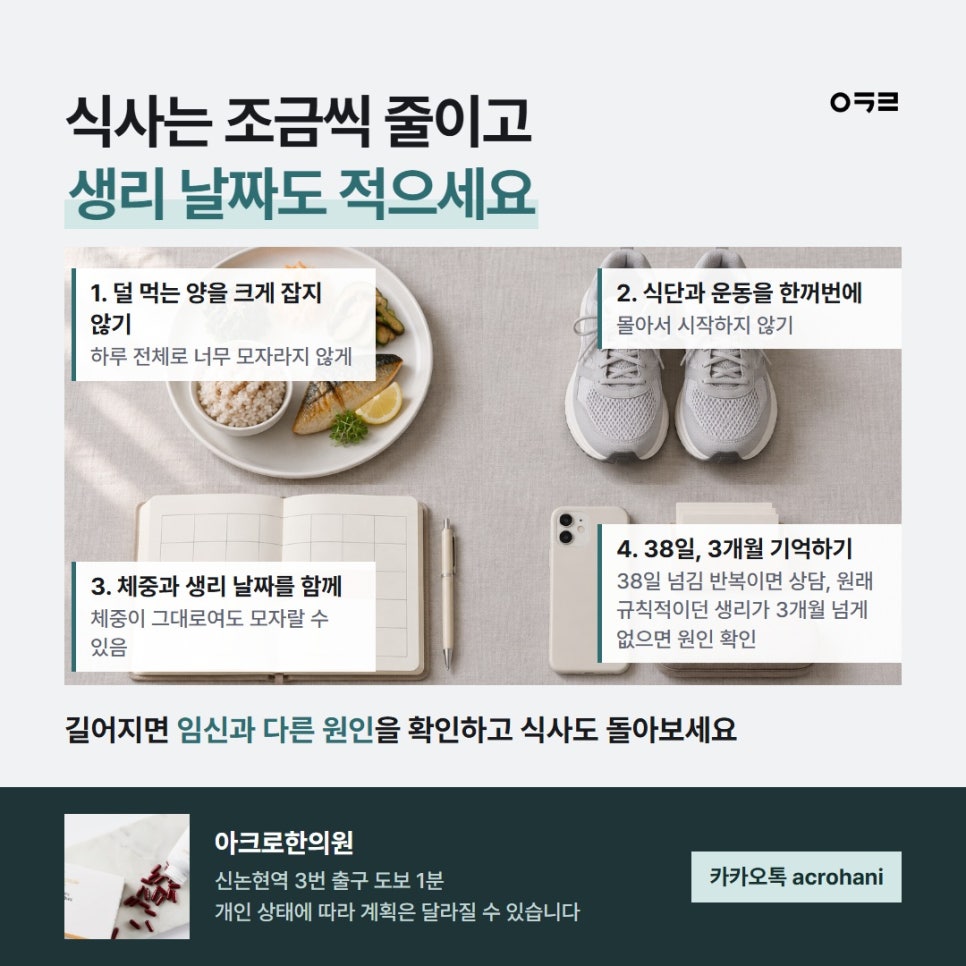
4. Remember 38 days and 3 months
If cycles longer than 38 days keep recurring, review your diet and exercise,
and if periods that used to be regular have been absent for more than 3 months, have the cause checked.
Frequently Asked Questions
Q. My period has become lighter while dieting. Is it because of the diet?
It’s hard to determine the cause from the amount alone.
Note the dates to see whether your cycle is also getting longer, and it’s a good idea to check for possible pregnancy as well.
Q. Can my period be late even if I haven’t lost much weight?
Yes, it can.
The 2025 consensus statement also said that energy deficiency can exist even when body weight stays the same.
Q. Can gaining weight also make periods irregular?
Periods can become irregular with weight gain too.
In a 2026 study analyzing 5,444 users of a period-tracking app in Japan,
women who were at a normal weight at age 18 but had a BMI of 23 or higher at the time of the survey showed a clearer association with menstrual irregularity than women who stayed at a normal weight.
We have also covered weight changes and irregular periods in an earlier post.
▶ The Relationship Between Dieting and Menstrual Irregularity
https://blog.naver.com/acrohani01/222917737480
To Sum Up
| 1. When you eat far less than the energy you use, the brain signals that control ovulation are disrupted 2. Menstrual changes can occur even with a shortfall of 500–800 kcal a day for 2–3 months and a loss of 3–4 kg 3. In a meta-analysis of 11 studies on menstrual irregularity, no clear association with exercise level was found 4. A normal cycle is 24–38 days, and if periods that used to be regular have been absent for more than 3 months, the cause should be checked 5. In exercising women whose periods had become infrequent or stopped due to energy deficiency, eating 300–600 kcal more a day could start recovery, and it took an average of 6 months to have two consecutive cycles shorter than 36 days 6. If periods stop for a long time, check bone health too; even if periods return, recovery of bone density is still hard to guarantee |
|---|
A delay of just a few days is not enough to pin down the cause.
However, if you’re dieting, energy deficiency may be one of the causes,
so record your period dates along with your weight,
and if your cycle gets longer, have the cause checked while adjusting your food intake and exercise.
| About ACRO Korean Medicine Clinic 📍 Location: 1 min walk from Sinnonhyeon Station Exit 3 (2F Boratial Bldg., 480 Gangnam-daero, Gangnam-gu, Seoul) 📞 Consultations: search “acrohani” on KakaoTalk 🌐 Website: https://acrohani.com/en 📝 Naver reviews 1,000+ (9.5★) | Gangnam Unni reviews 500+ (9.6★) 🕒 Hours: Weekdays 10:30–20:30 (lunch 13:00–14:00) / Weekends & public holidays 10:00–15:30 (no lunch break) |
|---|
This article is intended to provide general medical information and does not replace individual diagnosis or treatment.
The research results cited are values observed in the participants of those studies.
If you have symptoms, please see a doctor at a nearby medical institution.
References
Sultanova, Zhanat, et al. "Bone Mineral Density in Women with Functional Hypothalamic Amenorrhea: A Systematic Review and Meta-Analysis." Medical Sciences, vol. 14, no. 6, 2026, 615.
Salamunes, Ana Carla C., et al. "Bone Mineral Density and Bone Turnover Changes with Advanced Menstrual Recovery: The REFUEL Study." Bone, vol. 206, 2026, 117834.
Itoi, Shiori, et al. "Within-Individual Changes in BMI and Menstrual Irregularity: A Cohort Study Using Real-World Data." BMC Women's Health, vol. 26, 2026, article 124.
De Souza, Mary Jane, et al. "2025 Update to the Female Athlete Triad Coalition Consensus Statement Part 1: State of the Science and Introduction of a New Adolescent Model." Sports Medicine, vol. 56, no. 2, 2026, pp. 327-373.
Williams, Nancy I., et al. "2025 Update to the Female Athlete Triad Coalition Consensus Statement Part 2: Clinical Guidelines for Screening, Diagnosis, Treatment, and Return to Play for Adolescents and Adults." Sports Medicine, vol. 56, no. 2, 2026, pp. 375-427.
Mallinson, Rebecca J., et al. "Multiple Eumenorrheic Cycles Are Necessary to Observe a Significant Increase in Estrogen Exposure and Ovulation in Exercising Women with Functional Hypothalamic Oligo/Amenorrhea Undergoing a Nutritional Intervention: Insights from the REFUEL Study." PM&R, vol. 18, suppl. 2, 2026, pp. S104-S116.
Buchanan-Smith, Lucy I. M., et al. "Physical Activity and Menstrual Health Symptoms and Characteristics: A Systematic Review and Meta-Analysis of Observational Studies." Journal of Women's Health, vol. 34, no. 12, 2025, pp. 1535-1547.
Practice Committee of the American Society for Reproductive Medicine. "Current Evaluation of Amenorrhea: A Committee Opinion." Fertility and Sterility, vol. 122, no. 1, 2024, pp. 52-61.
Mountjoy, Margo, et al. "2023 International Olympic Committee's (IOC) Consensus Statement on Relative Energy Deficiency in Sport (REDs)." British Journal of Sports Medicine, vol. 57, no. 17, 2023, pp. 1073-1097.
Munro, Malcolm G., et al. "The FIGO Ovulatory Disorders Classification System." International Journal of Gynecology & Obstetrics, vol. 159, no. 1, 2022, pp. 1-20.
De Souza, Mary Jane, et al. "Bone Mineral Density in Response to Increased Energy Intake in Exercising Women with Oligomenorrhea/Amenorrhea: The REFUEL Randomized Controlled Trial." The American Journal of Clinical Nutrition, vol. 115, no. 6, 2022, pp. 1457-1472.
De Souza, Mary Jane, et al. "Randomised Controlled Trial of the Effects of Increased Energy Intake on Menstrual Recovery in Exercising Women with Menstrual Disturbances: The 'REFUEL' Study." Human Reproduction, vol. 36, no. 8, 2021, pp. 2285-2297.
Mena, Gabriela P., et al. "Prospective Associations between Physical Activity and BMI with Irregular Periods and Heavy Menstrual Bleeding in a Large Cohort of Australian Women." Human Reproduction, vol. 36, no. 6, 2021, pp. 1481-1491.